Public library services for Canadians with print disabilities
  • Mobile accessibility tips
    • Change contrast
      • AYellow on black selected
      • ABlack on yellow selected
      • AWhite on black selected
      • ABlack on white selected
      • ADefault colours selected
    • Change text size
      • Text size Small selected
      • Text size Medium selected
      • Text size Large selected
      • Text size Maximum selected
    • Change font
      • Arial selected
      • Verdana selected
      • Comic Sans MS selected
    • Change text spacing
      • Narrow selected
      • Medium selected
      • Wide selected
  • Register
  • Log in
  • Français
  • Home
  • Newspapers
  • Magazines
  • Recommended
  • For libraries
  • Help
  • Skip to content
      • Change contrast
        • AYellow on black selected
        • ABlack on yellow selected
        • AWhite on black selected
        • ABlack on white selected
        • ADefault colours selected
      • Change text size
        • Text size Small selected
        • Text size Medium selected
        • Text size Large selected
        • Text size Maximum selected
      • Change font
        • Arial selected
        • Verdana selected
        • Comic Sans MS selected
      • Change text spacing
        • Narrow selected
        • Medium selected
        • Wide selected
  • Accessibility tips
CELAPublic library services for Canadians with print disabilities

Centre for Equitable Library Access
Public library service for Canadians with print disabilities

  • Register
  • Log in
  • Français
  • Home
  • Newspapers
  • Magazines
  • Recommended
  • For libraries
  • Help
  • Advanced search
  • Browse by category
  • Search tips
Breadcrumb
  1. Home

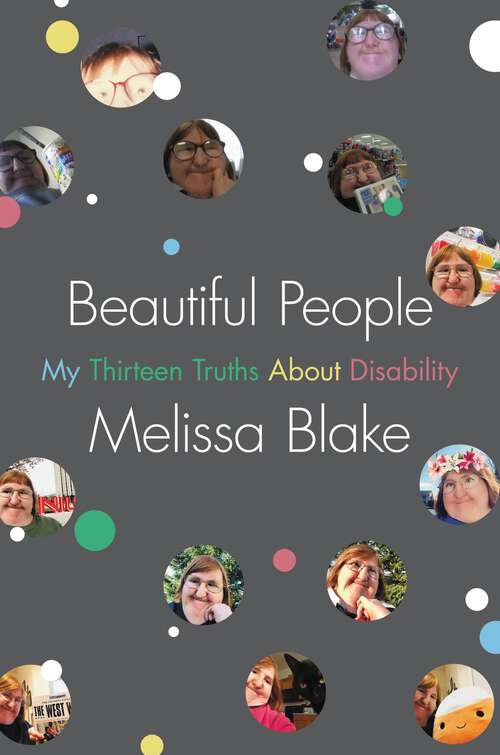
Beautiful People: My Thirteen Truths About Disability

By Melissa Blake

Biography of persons with disabilities, Journals and memoirs, Disabilities

Synthetic audio, Automated braille

Summary

Well-known disability activist and social media influencer Melissa Blake offers a frank, illuminating memoir and a call to action for disabled people and allies. In the summer of 2019, journalist Melissa Blake penned an op-ed for CNN Opinion. A conservative… pundit caught wind of it, mentioning Blake&’s work in a YouTube video. What happened next is equal parts a searing view into society, how we collectively view and treat disabled people, and the making of an advocate. After a troll said that Blake should be banned from posting pictures of herself, she took to Twitter and defiantly posted three smiling selfies, all taken during a lovely vacation in the Big Apple:I wanted desperately to clap back at these vile trolls in a way that would make a statement, not only about how our society views disabilities, but also about the toxicity of our strict and unrealistic beauty standards. Of course I knew that posting those selfies wasn't going to erase the nasty names I'd been called and, the chances were, they would never even see my tweet, but that didn't matter. I wasn't doing it for them; I was doing it for me and every single disabled person who has been bullied before, online and in real life. When people mock how I look, they're not just insulting me. They're insulting all disabled people. We're constantly told that we're repulsive and ugly and not good enough to be seen. This was me pushing back against that toxic, ableist narrative.For the first time, I felt like I was doing something empowering, taking back my power and changing the story. Her tweet went viral, attracting worldwide media attention and interviews with the BBC, USA Today, the Chicago Tribune, PEOPLE magazine, Good Morning America and E! News. Now, in her manifesto, Beautiful People, Blake shares her truths about disability, writing about (among other things): the language we use to describe disabled people ableism, microaggressions, and their pernicious effects what it's like to live in a society that not only isn't designed for you, but actively operates to render you invisible her struggles with self‑image and self‑acceptance the absence of disabled people in popular culture why disabled people aren't tragic heroes Blake also tells the stories of some of the heroes of the disability rights movement in America, in doing so rescuing their incredible achievements from near total obscurity. Highlighting other disabled activists and influencers, Blake&’s work is the calling card of a powerful voice—one that has sparked new, different, better conversations about disability.

Title Details

ISBN 9780306830440
Publisher Hachette Books Ireland
Copyright Date 2024
Book number 5915389
Report a problem with this book

Beautiful People: My Thirteen Truths About Disability

FAQ

Which devices can I use to read books and magazines from CELA?

Answer: CELA books and magazines work with many popular accessible reading devices and apps. Find out more on ourCompatible devices and formats page.

Go to Frequently Asked Questions page

About us

The Centre for Equitable Library Access, CELA, is an accessible library service, providing books and other materials to Canadians with print disabilities.

  • Learn more about CELA
  • Privacy
  • Terms of acceptable use
  • Member libraries

Follow us

Keep up with news from CELA!

  • Subscribe to our newsletters
  • Blog
  • Facebook
  • Bluesky
  • Twitter
  • Youtube

Suggestion Box

CELA welcomes all feedback and suggestions:

  • Join our Educator Advisory Group
  • Apply for our User Advisory Group
  • Suggest a title for the collection
  • Report a problem with a book

Contact Us

Email us at help@celalibrary.ca or call us at 1-855-655-2273 for support.

Go to contact page for full details

Copyright 2025 CELA. All rights reserved.