Public library services for Canadians with print disabilities
  • Mobile accessibility tips
    • Change contrast
      • AYellow on black selected
      • ABlack on yellow selected
      • AWhite on black selected
      • ABlack on white selected
      • ADefault colours selected
    • Change text size
      • Text size Small selected
      • Text size Medium selected
      • Text size Large selected
      • Text size Maximum selected
    • Change font
      • Arial selected
      • Verdana selected
      • Comic Sans MS selected
    • Change text spacing
      • Narrow selected
      • Medium selected
      • Wide selected
  • Register
  • Log in
  • Français
  • Home
  • Newspapers
  • Magazines
  • Recommended
  • For libraries
  • Help
  • Skip to content
      • Change contrast
        • AYellow on black selected
        • ABlack on yellow selected
        • AWhite on black selected
        • ABlack on white selected
        • ADefault colours selected
      • Change text size
        • Text size Small selected
        • Text size Medium selected
        • Text size Large selected
        • Text size Maximum selected
      • Change font
        • Arial selected
        • Verdana selected
        • Comic Sans MS selected
      • Change text spacing
        • Narrow selected
        • Medium selected
        • Wide selected
  • Accessibility tips
CELAPublic library services for Canadians with print disabilities

Centre for Equitable Library Access
Public library service for Canadians with print disabilities

  • Register
  • Log in
  • Français
  • Home
  • Newspapers
  • Magazines
  • Recommended
  • For libraries
  • Help
  • Advanced search
  • Browse by category
  • Search tips
Breadcrumb
  1. Home

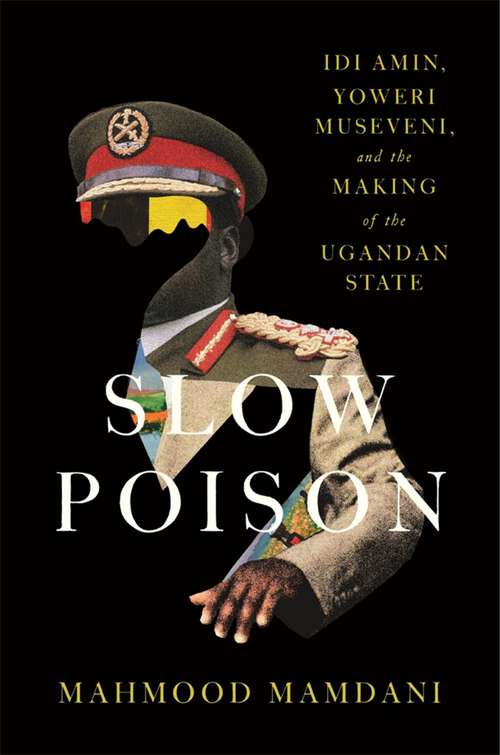
Slow Poison: Idi Amin, Yoweri Museveni, and the Making of the Ugandan State

By Mahmood Mamdani

Politics and government biography, History, Politics and government

Synthetic audio, Automated braille

Summary

A leading public intellectual gives his authoritative and personal account of the tragic postcolonial fate of Uganda, his homeland.In 1972, when Mahmood Mamdani came home to Uganda, he found a country transformed by “an orgy of violence.” Two years earlier,… with support from the colonial powers of Great Britain and Israel, Idi Amin had forcefully cemented his rule. He soon expelled Uganda’s Indian minority in hopes of fostering a nation for Black Ugandans. The plan backfired. Amin was followed by Yoweri Museveni, who has now ruled for nearly four decades. Whereas Amin tried to create a Black nation out of the majority, Museveni sought to fragment this majority into multiple ethnic minorities, re-creating a version of colonial indirect rule.Slow Poison is Mamdani’s firsthand report on the tragic unraveling of his country’s struggle for decolonialization. A witness to East Africa’s endlessly intricate power plays, and one of the most insightful political philosophers of his generation, Mamdani casts a learned and wary eye on Amin, internationally depicted as a buffoon; the radical scholar Museveni; and the global heavyweights that exploited and manipulated Uganda before and after its independence.Each leader made violence central to his project, but Mamdani sees a signal difference between Amin, who retained popular support to the end, and Museveni, who has not. The Asian expulsion made Amin a monster in the eyes of the West. In contrast, Museveni was hailed as standard bearer of the “war on terror” in Africa and was protected from accountability for far greater crimes. In exchange for adopting the package of neoliberal reforms known as the Washington Consensus, he became Africa’s poster child. Amin, who aimed to create a nation of Black millionaires, never became one himself. Meanwhile, Uganda’s surrender to privatization has brought Museveni’s family immense wealth, even as the country remains one of the world’s poorest.

Title Details

ISBN 9780674299870
Publisher Harvard University Press
Copyright Date 2025
Book number 6838503
Report a problem with this book

Slow Poison: Idi Amin, Yoweri Museveni, and the Making of the Ugandan State

FAQ

Which devices can I use to read books and magazines from CELA?

Answer: CELA books and magazines work with many popular accessible reading devices and apps. Find out more on ourCompatible devices and formats page.

Go to Frequently Asked Questions page

About us

The Centre for Equitable Library Access, CELA, is an accessible library service, providing books and other materials to Canadians with print disabilities.

  • Learn more about CELA
  • Privacy
  • Terms of acceptable use
  • Member libraries

Follow us

Keep up with news from CELA!

  • Subscribe to our newsletters
  • Blog
  • Facebook
  • Bluesky
  • Twitter
  • Youtube

Suggestion Box

CELA welcomes all feedback and suggestions:

  • Join our Educator Advisory Group
  • Apply for our User Advisory Group
  • Suggest a title for the collection
  • Report a problem with a book

Contact Us

Email us at help@celalibrary.ca or call us at 1-855-655-2273 for support.

Go to contact page for full details

Copyright 2025 CELA. All rights reserved.