Title search results
Showing 1 - 13 of 13 items

"From award-winning novelist and journalist Omar El Akkad comes a powerful reckoning with what it means to live in the…
heart of an empire that doesn't consider you fully human. On October 25th, 2023, after just three weeks of the bombardment of Gaza, Omar El Akkad put out a tweet: "One day, when it's safe, when there's no personal downside to calling a thing what it is, when it's too late to hold anyone accountable, everyone will have always been against this." This tweet was viewed more than ten million times. One Day Everyone Will Have Always Been Against This chronicles the deep fracture that has occurred for Black, brown, Indigenous Americans, as well as the upcoming generation, many of whom had clung to a thread of faith in Western ideals, in the idea that their countries, or the countries of their adoption, actually attempted to live up to the values they espouse"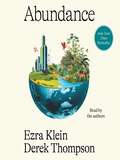
"A terrific book...Powerful and persuasive." —Fareed Zakaria "Spectacular...Offers a comprehensive indictment of the current problems and a clear path forward...Klein…
and Thompson usher in a mood shift. They inspire hope and enlarge the imagination." —David Brooks, The New York Times From bestselling authors and journalistic titans Ezra Klein and Derek Thompson, Abundance is a once-in-a-generation, paradigm-shifting call to renew a politics of plenty, face up to the failures of liberal governance, and abandon the chosen scarcities that have deformed American life. To trace the history of the twenty-first century so far is to trace a history of unaffordability and shortage. After years of refusing to build sufficient housing, America has a national housing crisis. After years of limiting immigration, we don't have enough workers. Despite decades of being warned about the consequences of climate change, we haven't built anything close to the clean-energy infrastructure we need. Ambitious public projects are finished late and over budget—if they are ever finished at all. The crisis that's clicking into focus now has been building for decades—because we haven't been building enough. Abundance explains that our problems today are not the results of yesteryear's villains. Rather, one generation's solutions have become the next generation's problems. Rules and regulations designed to solve the problems of the 1970s often prevent urban-density and green-energy projects that would help solve the problems of the 2020s. Laws meant to ensure that government considers the consequences of its actions have made it too difficult for government to act consequentially. In the last few decades, our capacity to see problems has sharpened while our ability to solve them has diminished. Progress requires facing up to the institutions in life that are not working as they need to. It means, for liberals, recognizing when the government is failing. It means, for conservatives, recognizing when the government is needed. In a book exploring how we can move from a liberalism that not only protects and preserves but also builds , Klein and Thompson trace the political, economic, and cultural barriers to progress and propose a path toward a politics of abundance. At a time when movements of scarcity are gaining power in country after country, this is an answer that meets the challenges of the moment while grappling honestly with the fury so many rightfully feel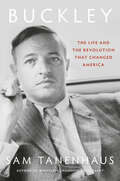
&“A magnificent achievement—a long, gripping, and enthralling account of the life of America&’s premier conservative polemicist of the twentieth century.&”—Max…
Boot, author of Reagan: His Life and Legend&“A rich, immersive biography exposes the roots of the modern conservative movement through the life of the firebrand writer and commentator who shaped it.&”—The New York Times Book Review (Editors&’ Choice)In 1951, with the publication of God and Man at Yale, a scathing attack on his alma mater, twenty-five-year-old William F. Buckley, Jr., seized the public stage—and commanded it for the next half century as he led a new generation of conservative activists and ideologues to the peak of political power and cultural influence.Ten years before his death in 2008, Buckley chose prize-winning biographer Sam Tanenhaus to tell the full, uncensored story of his life and times, granting him extensive interviews and exclusive access to his most private papers. Thus began a deep investigation into the vast and often hidden universe of Bill Buckley and the modern conservative revolution.Buckley vividly captures its subject in all his facets and phases: founding editor of National Review, the twentieth century&’s most influential political journal; syndicated columnist, Emmy-winning TV debater, and bestselling spy novelist; ally of Joseph McCarthy and Barry Goldwater; mentor to Ronald Reagan; game-changing candidate for mayor of New York.Tanenhaus also has uncovered the darker trail of Bill Buckley&’s secret exploits, including CIA missions in Latin America, dark collusions with Watergate felon Howard Hunt, and Buckley&’s struggle in his last years to hold together a movement coming apart over the AIDS epidemic, culture wars, and the invasion of Iraq—even as his own media empire was unraveling.At a crucial moment in American history, Buckley offers a gripping and powerfully relevant story about the birth of modern politics and those who shaped it.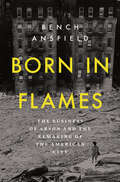
"[R]evelatory…Deeply researched and masterfully told." —Brian Goldstone, New York Times Book Review The explosive account of the arson wave that…
hit the Bronx and other American cities in the 1970s—and its legacy today. "Ladies and gentlemen, the Bronx is burning!" That legendary and apocryphal phrase, allegedly uttered by announcers during the 1977 World Series as flames rose above Yankee Stadium, seemed to encapsulate an entire era in this nation’s urban history. Across that decade, a wave of arson coursed through American cities, destroying entire neighborhoods home to poor communities of color. Yet as historian Bench Ansfield demonstrates in Born in Flames, the most destructive of the fires were not set by residents, as is commonly assumed, but by landlords looking to collect insurance payouts. Driven by perverse incentives—new government-sponsored insurance combined with tanking property values—landlords hired "torches," mostly Black and Brown youth, to set fires in the buildings, sometimes with people still living in them. Tens of thousands of families lost their homes to these blazes, yet for much of the 1970s, tenant vandalism and welfare fraud stood as the prevailing explanations for the arson wave, effectively indemnifying landlords. Ansfield’s book, based on a decade of research, introduces the term "brownlining" for the destructive insurance practices imposed on poor communities of color under the guise of racial redress. Ansfield shows that as the FIRE industries—finance, insurance, and real estate— eclipsed manufacturing in the 1970s, they began profoundly reshaping Black and Brown neighborhoods, seeing them as easy sources of profit. At every step, Ansfield charts the tenant-led resistance movements that sprung up in the Bronx and elsewhere, as well as the explosion of popular culture around the fires, from iconic movies like The Towering Inferno to hit songs such as "Disco Inferno." Ultimately, they show how similarly pernicious dynamics around insurance and race are still at play in our own era, especially in regions most at risk of climate shocks.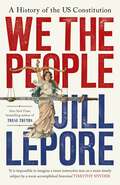
On the 250th anniversary of America's founding - a landmark history of the US Constitution for a troubling new era.…
The US Constitution is among the oldest constitutions in the world - and one of the most difficult to amend. Although nearly twelve thousand amendments have been proposed since 1789, only twenty-seven have ever been ratified. Tellingly, the Constitution has not been meaningfully amended since 1971. Without amendment, the risk of political violence rises. So does the risk of constitutional change by presidential power. Leading Harvard historian Jill Lepore captures the stories of generations of ordinary people who have attempted everything from abolishing the Electoral College to guaranteeing environmental rights, hoping to mend their nation. Recounting the history of America through centuries of efforts to realize the promise of the Constitution, we witness how nearly all those bids have failed.We the People is the sweeping account of a struggle, arguing that the Constitution was never intended to be preserved, but was expected to be gradually altered. At a time when the risk of political violence is all too real, it hints at the prospects for a better, amended America.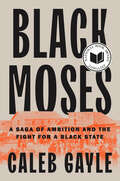
Longlisted for the National Book Award for NonfictionOne of The Washington Post's Best Nonfiction Books of the Year A New…
York Times Editors' Choice Pick&“Powerful… [and] fascinating.&” —The Washington PostThe remarkable story of Edward McCabe, a Black man who tried to establish a Black state within the United States.In this paradigm-shattering work of American history, Caleb Gayle recounts the extraordinary tale of Edward McCabe, a Black man who championed the audacious idea to create a state within the Union governed by and for Black people — and the racism, politics, and greed that thwarted him.As the sweeping changes and brief glimpses of hope brought by the Civil War and Reconstruction began to wither, anger at the opportunities available to newly freed Black people were on the rise. As a result, both Blacks and whites searched for new places to settle. That was when Edward McCabe, a Black businessman and a rising political star in the American West, set in motion his plans to found a state within the Union for Black people to live in and govern. His chosen site: Oklahoma, a place that the U.S. government had deeded to Indigenous people in the 1830s when it forced thousands of them to leave their homes under Indian Removal, which became known as the Trail of Tears.McCabe lobbied politicians in Washington, D.C., Kansas, and elsewhere as he exhorted Black people to move to Oklahoma to achieve their dreams of self-determination and land ownership. His rising profile as a leader and spokesman for Black people as well as his willingness to confront white politicians led him to become known as Black Moses. And like his biblical counterpart, McCabe nearly made it to the promised land but was ultimately foiled by politics, business interests, and the growing ambitions of white settlers who also wanted the land.In Black Moses, Gayle brings to vivid life the world of Edward McCabe: the Black people who believed in his dream of a Black state, the white politicians who didn't, and the larger challenges of confronting the racism and exclusion that bedeviled Black people's attempts to carve a place in America for themselves. Gayle draws from extraordinary research and reporting to reveal an America that almost was.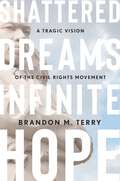
A landmark reinterpretation of the civil rights movement that challenges reductive heroic narratives of the 1950s and 1960s and invigorates…
new debates and possibilities for the future of the struggle for liberation.We are all familiar with the romantic vision of the civil rights movement: a moment when heroic African Americans and their allies triumphed over racial oppression through courageous protest, forging a new consensus in American life and law. But what are the effects of this celebratory storytelling? What happens when a living revolt against injustice becomes an embalmed museum piece?In this innovative work, Brandon Terry develops a novel theory of interpretation to show how competing accounts of the civil rights movement circulate through politics and political philosophy. The dominant narrative is romantic. This “arc of justice” narrative is found in popular histories, the speeches of Barack Obama, and even the writings of the liberal philosopher John Rawls. Despite being public orthodoxy, these romantic visions are exhausted and unpersuasive on their own terms. The breakdown of the authority of this history of justice has created space for a rival ironic mode, embodied in the political ideas of Afropessimism. While offering a sympathetic critique, Terry ultimately finds Afropessimist thought self-undermining and unworkable.Instead, he argues, the civil rights movement is best understood in tragic terms. By challenging the attachment to triumphant pasts, Terry demonstrates that tragedy exemplifies what the civil rights movement has been and can still be. Provocative and original, Shattered Dreams, Infinite Hope offers an optimistic political vision without naïveté, to train our judgment and resilience in the face of reasonable despair.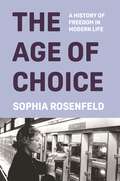
A sweeping history of the rise of personal choice in the modern world and how it became equated with freedomChoice…
touches virtually every aspect of our lives, from what to buy and where to live to whom to love, what profession to practice, and even what to believe. But the option to choose in such matters was not something we always possessed or even aspired to. At the same time, we have been warned by everybody from marketing gurus to psychologists about the negative consequences stemming from our current obsession with choice. It turns out that not only are we not very good at realizing our personal desires, we are also overwhelmed with too many possibilities and anxious about what best to select. There are social costs too. How did all this happen? The Age of Choice tells the long history of the invention of choice as the defining feature of modern freedom.Taking readers from the seventeenth century to today, Sophia Rosenfeld describes how the early modern world witnessed the simultaneous rise of shopping as an activity and religious freedom as a matter of being able to pick one&’s convictions. Similarly, she traces the history of choice in romantic life, politics, and the ideals of human rights. Throughout, she pays particular attention to the lives of women, those often with the fewest choices, who have frequently been the drivers of this change. She concludes with an exploration of how reproductive rights have become a symbolic flashpoint in our contemporary struggles over the association of liberty with choice.Drawing on a wealth of sources ranging from novels and restaurant menus to the latest scientific findings about choice in psychology and economics, The Age of Choice urges us to rethink the meaning of choice and its promise and limitations in modern life.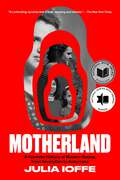
FINALIST FOR THE NATIONAL BOOK AWARD NAMED ONE OF THE 10 BEST BOOKS OF 2025 BY THE WASHINGTON POST NAMED…
ONE OF THE 100 NOTABLE BOOKS OF 2025 BY THE NEW YORK TIMES A GUARDIAN BEST BOOK OF 2025 NAMED ONE OF THE BEST BOOKS OF FALL 2025 BY ELLE ONE OF CHICAGO PUBLIC LIBRARY'S MUST-READ BOOKS OF 2025 Acclaimed journalist Julia Ioffe tells the story of modern Russia through the history of its women, from revolution to utopia to autocracy.In 1990, seven-year-old Julia Ioffe and her family fled the Soviet Union. Nearly twenty years later, Ioffe returned to Moscow—only to discover just how much Russian society had changed while she had been living in America. The Soviet women she had known growing up—doctors, engineers, scientists—seemed to have been replaced by women desperate to marry rich and become stay-at-home moms. How had Russia gone from portraying itself as the vanguard of world feminism to becoming a bastion of conservative Christian values?In Motherland, Ioffe turns modern Russian history on its head, telling it exclusively through the stories of its women. From her own physician great-grandmothers to Lenin&’s lover, a feminist revolutionary; from the hundreds of thousands of Soviet girls who fought in World War II to the millions of single mothers who rebuilt and repopulated a devastated country; from the members of Pussy Riot to Yulia Navalnaya, the wife of opposition leader Alexey Navalny, Ioffe chronicles one of the most audacious social experiments in history and documents how it failed the very women it was meant to liberate—and how that failure paved the way for the revanche of Vladimir Putin.Part memoir, part journalistic exploration, part history, Motherland paints a portrait of modern Russia through the women who shaped it. With deep emotion, Ioffe reveals what it means to live through the cataclysms of revolution, war, idealism, and heartbreak—and how the story of Russia today is inextricably tied to the sacrifices of its women.This meticulously researched history interweaves the personal and the political to explore:The Russian Revolution: Discover the forgotten women who started the revolution, from textile workers on strike to feminist revolutionaries like Alexandra Kollontai.A Grand Social Experiment: Trace the audacious Soviet attempt to emancipate women—and document how its failure paved the way for Vladimir Putin.World War II Through Women's Eyes: Meet the hundreds of thousands of Soviet girls who served as snipers, medics, and fighter pilots in all-female squadrons during the war.Four Generations of a Family: Follow the author’s own remarkable family history, from her great-grandmothers—pioneering female physicians—to her own journey from Soviet refugee to acclaimed journalist.Modern Russia's Matriarchs: From the members of Pussy Riot to Yulia Navalnaya, understand the present through the women shaping Russia's turbulent political landscape today.
&“Phenomenal…a jaw-dropping book.&” —Jon Stewart, The Daily Show Named by The New York Times, The New Yorker, and Prospect magazine…
as a best book of the year, this &“scrupulously reported&” (The New Yorker) and &“astonishing&” (The Daily Telegraph, London) book rivets with its portrayal of how Apple allowed itself to become dependent on China for a huge percentage of its manufacturing, making it vulnerable and unwittingly laying the groundwork for the Asian superpower to rival the US in technological expertise.After struggling to build products on three continents, Apple turned to China&’s seemingly endless supply of cheap labor. It soon deployed thousands of engineers, trained millions of workers, and invested hundreds of billions of dollars to create the most advanced global supply chain. These efforts fueled the iPhone&’s dominance—but also laid the foundation for a powerful, state-supported Chinese electronics industry. What began as a business decision evolved into a cautionary tale of global trade, tech rivalry, and national security. Without intending to, Apple helped Beijing acquire technological influence that could now be weaponized—a central concern in the ongoing US-China tech war. Drawing on over two hundred interviews, Patrick McGee exposes never-before-reported details from Silicon Valley to Shenzhen: internal emails, secretive executive meetings, and overlooked voices inside the company&’s China operations. You&’ll meet the &“Gang of Eight&” executives tasked with appeasing Beijing, a Mormon missionary who launched Apple retail in China, and a veteran whose dreams of improving factory conditions were crushed by both Apple&’s demands and Xi Jinping&’s authoritarian crackdown. From Foxconn and Tim Cook to the Chinese Communist Party and Taiwan Semiconductor, this is a revelatory look at how Apple, in seeking efficiency, became entangled in the very politics it once claimed to challenge. For readers of Chip War, American Factory, and The Big Short, Apple in China is a searing examination of corporate power, Chinese nationalism, deglobalization, and the fragile relationship between Silicon Valley and the world&’s rising superpower.
ONE OF THE NEW YORK TIMES AND THE ATLANTIC&’S TEN BEST BOOKS OF THE YEAR • ONE OF BARACK OBAMA&’S…
FAVORITE BOOKS OF THE YEAR • Through the &“revelatory and gut-wrenching&” (Associated Press) stories of five Atlanta families, this landmark work of journalism exposes a new and troubling trend—the dramatic rise of the working homeless in cities across America.&“An exceptional feat of reporting, full of an immediacy that calls to mind Adrian Nicole LeBlanc&’s Random Family and Matthew Desmond&’s Evicted.&”—The New York Times Book Review (Editors&’ Choice)FINALIST FOR THE ANDREW CARNEGIE MEDAL • A BEST BOOK OF THE YEAR: NPR, The Washington Post, Atlanta Journal-Constitution, Elle, New America, BookPage, Shelf AwarenessThe working homeless. In a country where hard work and determination are supposed to lead to success, there is something scandalous about this phrase. But skyrocketing rents, low wages, and a lack of tenant rights have produced a startling phenomenon: People with full-time jobs cannot keep a roof over their head, especially in America&’s booming cities, where rapid growth is leading to catastrophic displacement. These families are being forced into homelessness not by a failing economy but a thriving one.In this gripping and deeply reported book, Brian Goldstone plunges readers into the lives of five Atlanta families struggling to remain housed in a gentrifying, increasingly unequal city. Maurice and Natalia make a fresh start in the country&’s &“Black Mecca&” after being priced out of DC. Kara dreams of starting her own cleaning business while mopping floors at a public hospital. Britt scores a coveted housing voucher. Michelle is in school to become a social worker. Celeste toils at her warehouse job while undergoing treatment for ovarian cancer. Each of them aspires to provide a decent life for their children—and each of them, one by one, joins the ranks of the nation&’s working homeless.Through intimate, novelistic portraits, Goldstone reveals the human cost of this crisis, following parents and their kids as they go to sleep in cars, or in squalid extended-stay hotel rooms, and head out to their jobs and schools the next morning. These are the nation&’s hidden homeless—omitted from official statistics, and proof that overflowing shelters and street encampments are only the most visible manifestation of a far more pervasive problem.By turns heartbreaking and urgent, There Is No Place for Us illuminates the true magnitude, causes, and consequences of the new American homelessness—and shows that it won&’t be solved until housing is treated as a fundamental human right.
#1 NEW YORK TIMES BESTSELLER • ONE OF BARACK OBAMA&’S FAVORITE BOOKS OF 2025 • NEW YORK TIMES 100 NOTABLE…
BOOKS OF 2025 • KIRKUS REVIEWS BEST BOOKS OF 2025 • NPR BOOKS WE LOVE 2025 &“A must-read for progressives who want a blueprint for reforming government so it can deliver for working people.&” —Barack Obama • &“A terrific book...Powerful and persuasive.&” —Fareed Zakaria • &“Spectacular…Offers a comprehensive indictment of the current problems and a clear path forward…Klein and Thompson usher in a mood shift. They inspire hope and enlarge the imagination.&” —David Brooks, The New York Times From bestselling authors and journalistic titans Ezra Klein and Derek Thompson, Abundance is a once-in-a-generation, paradigm-shifting call to renew a politics of plenty, face up to the failures of liberal governance, and abandon the chosen scarcities that have deformed American life.To trace the history of the twenty-first century so far is to trace a history of unaffordability and shortage. After years of refusing to build sufficient housing, America has a national housing crisis. After years of limiting immigration, we don&’t have enough workers. Despite decades of being warned about the consequences of climate change, we haven&’t built anything close to the clean-energy infrastructure we need. Ambitious public projects are finished late and over budget—if they are ever finished at all. The crisis that&’s clicking into focus now has been building for decades—because we haven&’t been building enough. Abundance explains that our problems today are not the results of yesteryear&’s villains. Rather, one generation&’s solutions have become the next generation&’s problems. Rules and regulations designed to solve the problems of the 1970s often prevent urban-density and green-energy projects that would help solve the problems of the 2020s. Laws meant to ensure that government considers the consequences of its actions have made it too difficult for government to act consequentially. In the last few decades, our capacity to see problems has sharpened while our ability to solve them has diminished. Progress requires facing up to the institutions in life that are not working as they need to. It means, for liberals, recognizing when the government is failing. It means, for conservatives, recognizing when the government is needed. In a book exploring how we can move from a liberalism that not only protects and preserves but also builds, Klein and Thompson trace the political, economic, and cultural barriers to progress and propose a path toward a politics of abundance. At a time when movements of scarcity are gaining power in country after country, this is an answer that meets the challenges of the moment while grappling honestly with the fury so many rightfully feel.
A New York Times Notable Book • Winner of the National Book Critics Circle Award for Nonfiction • A New…
York Times Bestseller • Named a Best Book of the Year by Smithsonian, Scientific American, and Elle • Winner of the Porchlight Business Book Award&“A bestselling page-turner that has made waves not just in Silicon Valley but around the world . . . With Empire of AI, Hao is fundamentally shaping many people&’s perceptions and understanding of the company at the center of the AI revolution.&” —TIME Magazine, &“TIME100 AI 2025&”&“Excellent and deeply reported.&” —Tim Wu, The New York Times&“Startling and intensely researched . . . an essential account of how OpenAI and ChatGPT came to be and the catastrophic places they will likely take us.&” —VultureFrom a brilliant longtime AI insider with intimate access to the world of Sam Altman's OpenAI from the beginning, an eye-opening account of arguably the most fateful tech arms race in history, reshaping the planet in real time, from the cockpit of the company that is driving the frenzyWhen AI expert and investigative journalist Karen Hao first began covering OpenAI in 2019, she thought they were the good guys. Founded as a nonprofit with safety enshrined as its core mission, the organization was meant, its leader Sam Altman told us, to act as a check against more purely mercantile, and potentially dangerous, forces. What could go wrong?Over time, Hao began to wrestle ever more deeply with that question. Increasingly, she realized that the core truth of this massively disruptive sector is that its vision of success requires an almost unprecedented amount of resources: the &“compute&” power of high-end chips and the processing capacity to create massive large language models, the sheer volume of data that needs to be amassed at scale, the humans &“cleaning up&” that data for sweatshop wages throughout the Global South, and a truly alarming spike in the usage of energy and water underlying it all. The truth is that we have entered a new and ominous age of empire: only a small handful of globally scaled companies can even enter the field of play. At the head of the pack with its ChatGPT breakthrough, how would OpenAI resist such temptations?Spoiler alert: it didn&’t. Armed with Microsoft&’s billions, OpenAI is setting a breakneck pace, chased by a small group of the most valuable companies in human history—toward what end, not even they can define. All this time, Hao has maintained her deep sourcing within the company and the industry, and so she was in intimate contact with the story that shocked the entire tech industry—Altman&’s sudden firing and triumphant return. The behind-the-scenes story of what happened, told here in full for the first time, is revelatory of who the people controlling this technology really are. But this isn&’t just the story of a single company, however fascinating it is. The g forces pressing down on the people of OpenAI are deforming the judgment of everyone else too—as such forces do. Naked power finds the ideology to cloak itself; no one thinks they&’re the bad guy. But in the meantime, as Hao shows through intrepid reporting on the ground around the world, the enormous wheels of extraction grind on. By drawing on the viewpoints of Silicon Valley engineers, Kenyan data laborers, and Chilean water activists, Hao presents the fullest picture of AI and its impact we&’ve seen to date, alongside a trenchant analysis of where things are headed. An astonishing eyewitness view from both up in the command capsule of the new economy and down where the real suffering happens, Empire of AI pierces the veil of the industry defining our era.