Title search results
Showing 1 - 11 of 11 items
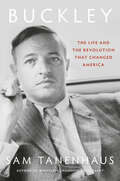
&“A magnificent achievement—a long, gripping, and enthralling account of the life of America&’s premier conservative polemicist of the twentieth century.&”—Max…
Boot, author of Reagan: His Life and Legend&“A rich, immersive biography exposes the roots of the modern conservative movement through the life of the firebrand writer and commentator who shaped it.&”—The New York Times Book Review (Editors&’ Choice)In 1951, with the publication of God and Man at Yale, a scathing attack on his alma mater, twenty-five-year-old William F. Buckley, Jr., seized the public stage—and commanded it for the next half century as he led a new generation of conservative activists and ideologues to the peak of political power and cultural influence.Ten years before his death in 2008, Buckley chose prize-winning biographer Sam Tanenhaus to tell the full, uncensored story of his life and times, granting him extensive interviews and exclusive access to his most private papers. Thus began a deep investigation into the vast and often hidden universe of Bill Buckley and the modern conservative revolution.Buckley vividly captures its subject in all his facets and phases: founding editor of National Review, the twentieth century&’s most influential political journal; syndicated columnist, Emmy-winning TV debater, and bestselling spy novelist; ally of Joseph McCarthy and Barry Goldwater; mentor to Ronald Reagan; game-changing candidate for mayor of New York.Tanenhaus also has uncovered the darker trail of Bill Buckley&’s secret exploits, including CIA missions in Latin America, dark collusions with Watergate felon Howard Hunt, and Buckley&’s struggle in his last years to hold together a movement coming apart over the AIDS epidemic, culture wars, and the invasion of Iraq—even as his own media empire was unraveling.At a crucial moment in American history, Buckley offers a gripping and powerfully relevant story about the birth of modern politics and those who shaped it.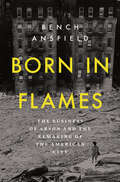
"[R]evelatory…Deeply researched and masterfully told." —Brian Goldstone, New York Times Book Review The explosive account of the arson wave that…
hit the Bronx and other American cities in the 1970s—and its legacy today. "Ladies and gentlemen, the Bronx is burning!" That legendary and apocryphal phrase, allegedly uttered by announcers during the 1977 World Series as flames rose above Yankee Stadium, seemed to encapsulate an entire era in this nation’s urban history. Across that decade, a wave of arson coursed through American cities, destroying entire neighborhoods home to poor communities of color. Yet as historian Bench Ansfield demonstrates in Born in Flames, the most destructive of the fires were not set by residents, as is commonly assumed, but by landlords looking to collect insurance payouts. Driven by perverse incentives—new government-sponsored insurance combined with tanking property values—landlords hired "torches," mostly Black and Brown youth, to set fires in the buildings, sometimes with people still living in them. Tens of thousands of families lost their homes to these blazes, yet for much of the 1970s, tenant vandalism and welfare fraud stood as the prevailing explanations for the arson wave, effectively indemnifying landlords. Ansfield’s book, based on a decade of research, introduces the term "brownlining" for the destructive insurance practices imposed on poor communities of color under the guise of racial redress. Ansfield shows that as the FIRE industries—finance, insurance, and real estate— eclipsed manufacturing in the 1970s, they began profoundly reshaping Black and Brown neighborhoods, seeing them as easy sources of profit. At every step, Ansfield charts the tenant-led resistance movements that sprung up in the Bronx and elsewhere, as well as the explosion of popular culture around the fires, from iconic movies like The Towering Inferno to hit songs such as "Disco Inferno." Ultimately, they show how similarly pernicious dynamics around insurance and race are still at play in our own era, especially in regions most at risk of climate shocks.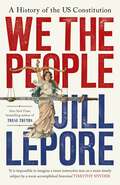
On the 250th anniversary of America's founding - a landmark history of the US Constitution for a troubling new era.…
The US Constitution is among the oldest constitutions in the world - and one of the most difficult to amend. Although nearly twelve thousand amendments have been proposed since 1789, only twenty-seven have ever been ratified. Tellingly, the Constitution has not been meaningfully amended since 1971. Without amendment, the risk of political violence rises. So does the risk of constitutional change by presidential power. Leading Harvard historian Jill Lepore captures the stories of generations of ordinary people who have attempted everything from abolishing the Electoral College to guaranteeing environmental rights, hoping to mend their nation. Recounting the history of America through centuries of efforts to realize the promise of the Constitution, we witness how nearly all those bids have failed.We the People is the sweeping account of a struggle, arguing that the Constitution was never intended to be preserved, but was expected to be gradually altered. At a time when the risk of political violence is all too real, it hints at the prospects for a better, amended America.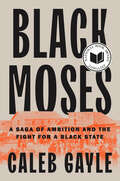
Longlisted for the National Book Award for NonfictionOne of The Washington Post's Best Nonfiction Books of the Year A New…
York Times Editors' Choice Pick&“Powerful… [and] fascinating.&” —The Washington PostThe remarkable story of Edward McCabe, a Black man who tried to establish a Black state within the United States.In this paradigm-shattering work of American history, Caleb Gayle recounts the extraordinary tale of Edward McCabe, a Black man who championed the audacious idea to create a state within the Union governed by and for Black people — and the racism, politics, and greed that thwarted him.As the sweeping changes and brief glimpses of hope brought by the Civil War and Reconstruction began to wither, anger at the opportunities available to newly freed Black people were on the rise. As a result, both Blacks and whites searched for new places to settle. That was when Edward McCabe, a Black businessman and a rising political star in the American West, set in motion his plans to found a state within the Union for Black people to live in and govern. His chosen site: Oklahoma, a place that the U.S. government had deeded to Indigenous people in the 1830s when it forced thousands of them to leave their homes under Indian Removal, which became known as the Trail of Tears.McCabe lobbied politicians in Washington, D.C., Kansas, and elsewhere as he exhorted Black people to move to Oklahoma to achieve their dreams of self-determination and land ownership. His rising profile as a leader and spokesman for Black people as well as his willingness to confront white politicians led him to become known as Black Moses. And like his biblical counterpart, McCabe nearly made it to the promised land but was ultimately foiled by politics, business interests, and the growing ambitions of white settlers who also wanted the land.In Black Moses, Gayle brings to vivid life the world of Edward McCabe: the Black people who believed in his dream of a Black state, the white politicians who didn't, and the larger challenges of confronting the racism and exclusion that bedeviled Black people's attempts to carve a place in America for themselves. Gayle draws from extraordinary research and reporting to reveal an America that almost was.
Winner of the MAAH Stone Book Award Winner of the 2025 Avern Cohn AwardA New York Times Notable Book of…
2025, A New Yorker Best Book of 2025 selectionA Christian Science Monitor 25 Best Books of 2025The epic story of Detroit’s struggle to integrate schools in its suburbs—and the defeat of desegregation in the North.In 1974, the Supreme Court issued a momentous decision: In the case of Milliken v. Bradley, the justices brought a halt to school desegregation across the North, and to the civil rights movement’s struggle for a truly equal education for all. How did this come about, and why? In The Containment, the esteemed legal scholar Michelle Adams tells the epic story of the struggle to integrate Detroit schools—and what happened when it collided with Nixon-appointed justices committed to a judicial counterrevolution. Adams chronicles the devoted activists who tried to uplift Detroit's students amid the upheavals of riots, Black power, and white flight—and how their efforts led to federal judge Stephen Roth’s landmark order to achieve racial balance by tearing down the walls separating the city and its suburbs. The “metropolitan remedy” could have remade the landscape of racial justice. Instead, the Supreme Court ruled that the suburbs could not be a part of the effort to integrate—and thus upheld the inequalities that remain in place today. Adams tells this story via compelling portraits of a city under stress and of key figures—including Detroit’s first Black mayor, Coleman Young, and Justices Marshall, Rehnquist, and Powell. The result is a legal and historical drama that exposes the roots of today’s backlash against affirmative action and other efforts to fulfill the country’s promise.
A landmark reinterpretation of the civil rights movement that challenges reductive heroic narratives of the 1950s and 1960s and invigorates…
new debates and possibilities for the future of the struggle for liberation.We are all familiar with the romantic vision of the civil rights movement: a moment when heroic African Americans and their allies triumphed over racial oppression through courageous protest, forging a new consensus in American life and law. But what are the effects of this celebratory storytelling? What happens when a living revolt against injustice becomes an embalmed museum piece?In this innovative work, Brandon Terry develops a novel theory of interpretation to show how competing accounts of the civil rights movement circulate through politics and political philosophy. The dominant narrative is romantic. This “arc of justice” narrative is found in popular histories, the speeches of Barack Obama, and even the writings of the liberal philosopher John Rawls. Despite being public orthodoxy, these romantic visions are exhausted and unpersuasive on their own terms. The breakdown of the authority of this history of justice has created space for a rival ironic mode, embodied in the political ideas of Afropessimism. While offering a sympathetic critique, Terry ultimately finds Afropessimist thought self-undermining and unworkable.Instead, he argues, the civil rights movement is best understood in tragic terms. By challenging the attachment to triumphant pasts, Terry demonstrates that tragedy exemplifies what the civil rights movement has been and can still be. Provocative and original, Shattered Dreams, Infinite Hope offers an optimistic political vision without naïveté, to train our judgment and resilience in the face of reasonable despair.
A sweeping chronicle of four tumultuous years in 1980s New York that changed the city forever—and anticipated the forces that…
would soon divide the nation—from the bestselling author of Ladies and Gentlemen, the Bronx Is Burning&“A rip-roaring, sweeping, essential work of history . . . a deeply reported and brilliantly observed account of how the modern city was born and why all of us continue to live with the results.&”—Jonathan Eig, Pulitzer Prize–winning author of King: A LifeNew York entered 1986 as a city reborn. Record profits on Wall Street sent waves of money splashing across Manhattan, bringing a battered city roaring back to life.But it also entered 1986 as a city whose foundation was beginning to crack. Thousands of New Yorkers were sleeping in the streets, addicted to drugs, dying of AIDS, or suffering from mental illnesses. Nearly one-third of the city&’s Black and Hispanic residents were living below the federal poverty line. Long-simmering racial tensions threatened to boil over.The events of the next four years would split the city open. Howard Beach. Black Monday. Tawana Brawley. The crack epidemic. The birth of ACT UP. The Central Park jogger. The release of Do the Right Thing. And a cast of outsized characters—Ed Koch, Donald Trump, Al Sharpton, Spike Lee, Rudy Giuliani, Larry Kramer—would compete to shape the city&’s future while building their own mythologies.The Gods of New York is a kaleidoscopic and deeply immersive portrait of a city whose identity was suddenly up for grabs: Could it be both the great working-class city that lifted up immigrants from around the world and the money-soaked capital of global finance? Could it retain a civic culture—a common idea of what it meant to be a New Yorker—when the rich were building a city of their own and vast swaths of its citizens were losing faith in the systems meant to protect them? New York City was one thing at the dawn of 1986; it would be something very different as 1989 came to a close. This is the story of how that happened.
#1 NEW YORK TIMES BESTSELLER • In the second volume of the landmark American Revolution trilogy by the bestselling author…
of The British Are Coming, George Washington&’s army fights on the knife edge between victory and defeat.&“This is great history . . . compulsively readable . . . There is no better writer of narrative history than the Pulitzer Prize–winning Atkinson.&”—The New York Times (Editors&’ Choice)The first twenty-one months of the American Revolution—which began at Lexington and ended at Princeton—was the story of a ragged group of militiamen and soldiers fighting to forge a new nation. By the winter of 1777, the exhausted Continental Army could claim only that it had barely escaped annihilation by the world&’s most formidable fighting force.Two years into the war, George III is as determined as ever to bring his rebellious colonies to heel. But the king&’s task is now far more complicated: fighting a determined enemy on the other side of the Atlantic has become ruinously expensive, and spies tell him that the French and Spanish are threatening to join forces with the Americans.Prize-winning historian Rick Atkinson provides a riveting narrative covering the middle years of the Revolution. Stationed in Paris, Benjamin Franklin woos the French; in Pennsylvania, George Washington pleads with Congress to deliver the money, men, and materiel he needs to continue the fight. In New York, General William Howe, the commander of the greatest army the British have ever sent overseas, plans a new campaign against the Americans—even as he is no longer certain that he can win this searing, bloody war. The months and years that follow bring epic battles at Brandywine, Saratoga, Monmouth, and Charleston, a winter of misery at Valley Forge, and yet more appeals for sacrifice by every American committed to the struggle for freedom.Timed to coincide with the 250th anniversary of the beginning of the Revolution, Atkinson&’s brilliant account of the lethal conflict between the Americans and the British offers not only deeply researched and spectacularly dramatic history, but also a new perspective on the demands that a democracy makes on its citizens.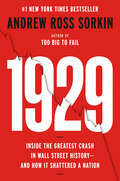
#1 NEW YORK TIMES BESTSELLER&“It is one of the best narrative histories I&’ve read.&”—The Wall Street JournalA New York Times…
Notable Book of 2025 • One of Barack Obama's Favorite Books of 2025 • Named a BEST BOOK OF 2025 by The Washington Post, TIME, The Economist, Air Mail, Bloomberg, Fast Company, Katie Couric Media, and HistoryFrom the bestselling author of Too Big to Fail, &“the definitive history of the 2008 banking crisis,&” (The Atlantic) comes a riveting narrative of the most infamous stock market crash in history—one with ripple effects that still shape our society today.In 1929, the world watched in shock as the unstoppable Wall Street bull market went into a freefall, wiping out fortunes and igniting a depression that would reshape a generation. But behind the flashing ticker tapes and panicked traders, another drama unfolded—one of visionaries and fraudsters, titans and dreamers, euphoria and ruin.With unparalleled access to historical records and newly uncovered documents, New York Times bestselling author Andrew Ross Sorkin takes readers inside the chaos of the crash, behind the scenes of a raging battle between Wall Street and Washington and the larger-than-life characters whose ambition and naïveté in an endless boom led to disaster. The dizzying highs and brutal lows of this era eerily mirror today&’s world—where markets soar, political tensions mount, and the fight over financial influence plays out once again.This is not just a story about money. 1929 is a tale of power, psychology, and the seductive illusion that this time is different. It&’s about disregarded alarm bells, financiers who fell from grace, and skeptics who saw the crash coming—only to be dismissed until it was too late.Hailed as a landmark book, Too Big to Fail reimagined how financial crises are told. Now, with 1929, Sorkin delivers an immersive, electrifying account of the most pivotal market collapse of all time—with lessons that remain as urgent as ever. More than just a history, 1929 is a crucial blueprint for understanding the cycles of speculation, the forces that drive financial upheaval, and the warning signs we ignore at our peril.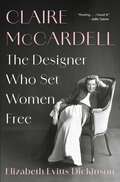
Named one of The New York Times&’s 100 Notable Books of 2025 The riveting hidden history of Claire McCardell, the…
most influential fashion designer you&’ve never heard of. Claire McCardell forever changed fashion—and most importantly, the lives of women. She shattered cultural norms around women&’s clothes, and today much of what we wear traces back to her ingenious, rebellious mind. McCardell invented ballet flats and mix-and-match separates, and she introduced wrap dresses, hoodies, leggings, denim, and more into womenswear. She tossed out corsets in favor of a comfortably elegant look and insisted on pockets, even as male designers didn&’t see a need for them. She made zippers easy to reach because a woman &“may live alone and like it,&” McCardell once wrote, &“but you may regret it if you wrench your arm trying to zip a back zipper into place.&” After World War II, McCardell fought the severe, hyper-feminized silhouette championed by male designers, like Christian Dior. Dior claimed that he wanted to &“save women from nature.&” McCardell, by contrast, wanted to set women free. Claire McCardell became, as the young journalist Betty Friedan called her in 1955, &“The Gal Who Defied Dior.&” Filled with personal drama and industry secrets, this story reveals how Claire McCardell built an empire at a time when women rarely made the upper echelons of business. At its core, hers is a story about our right to choose how we dress—and our right to choose how we live.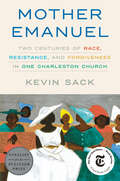
PULITZER PRIZE FINALIST • ONE OF THE NEW YORK TIMES&’ TEN BEST BOOKS OF THE YEAR • A sweeping history…
of one of the nation&’s most important African American churches and a profound story of courage and grace amid the fight for racial justice—from Pulitzer Prize–winning journalist Kevin Sack&“A masterpiece . . . a dense, rich, captivating narrative, featuring vivid prose . . . expansive, inspiring and hugely important.&”—The New York Times (Editors&’ Choice)&“Race, religion, and terror combine for an extraordinary story of America.&”—Eddie S. Glaude, Jr., bestselling author of Begin AgainA BEST BOOK OF THE YEAR: The New York Times Book Review, NPR, Kirkus ReviewsFew people beyond South Carolina&’s Lowcountry knew of Emanuel African Methodist Episcopal Church in Charleston—Mother Emanuel—before the night of June 17, 2015, when a twenty-one-year-old white supremacist walked into Bible study and slaughtered the church&’s charismatic pastor and eight other worshippers. Although the shooter had targeted Mother Emanuel—the first A.M.E. church in the South—to agitate racial strife, he did not anticipate the aftermath: an outpouring of forgiveness from the victims&’ families and a reckoning with the divisions of caste that have afflicted Charleston and the South since the earliest days of European settlement.Mother Emanuel explores the fascinating history that brought the church to that moment and the depth of the desecration committed in its fellowship hall. It reveals how African Methodism was cultivated from the harshest American soil, and how Black suffering shaped forgiveness into both a religious practice and a survival tool. Kevin Sack, who has written about race in his native South for more than four decades, uses the church to trace the long arc of Black life in the city where nearly half of enslaved Africans disembarked in North America and where the Civil War began. Through the microcosm of one congregation, he explores the development of a unique practice of Christianity, from its daring breakaway from white churches in 1817, through the traumas of Civil War and Reconstruction, to its critical role in the Civil Rights Movement and beyond.At its core, Mother Emanuel is an epic tale of perseverance, not just of a congregation but of a people who withstood enslavement, Jim Crow, and all manner of violence with an unbending faith.