Title search results
Showing 1 - 9 of 9 items
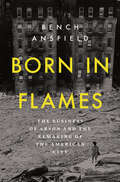
"[R]evelatory…Deeply researched and masterfully told." —Brian Goldstone, New York Times Book Review The explosive account of the arson wave that…
hit the Bronx and other American cities in the 1970s—and its legacy today. "Ladies and gentlemen, the Bronx is burning!" That legendary and apocryphal phrase, allegedly uttered by announcers during the 1977 World Series as flames rose above Yankee Stadium, seemed to encapsulate an entire era in this nation’s urban history. Across that decade, a wave of arson coursed through American cities, destroying entire neighborhoods home to poor communities of color. Yet as historian Bench Ansfield demonstrates in Born in Flames, the most destructive of the fires were not set by residents, as is commonly assumed, but by landlords looking to collect insurance payouts. Driven by perverse incentives—new government-sponsored insurance combined with tanking property values—landlords hired "torches," mostly Black and Brown youth, to set fires in the buildings, sometimes with people still living in them. Tens of thousands of families lost their homes to these blazes, yet for much of the 1970s, tenant vandalism and welfare fraud stood as the prevailing explanations for the arson wave, effectively indemnifying landlords. Ansfield’s book, based on a decade of research, introduces the term "brownlining" for the destructive insurance practices imposed on poor communities of color under the guise of racial redress. Ansfield shows that as the FIRE industries—finance, insurance, and real estate— eclipsed manufacturing in the 1970s, they began profoundly reshaping Black and Brown neighborhoods, seeing them as easy sources of profit. At every step, Ansfield charts the tenant-led resistance movements that sprung up in the Bronx and elsewhere, as well as the explosion of popular culture around the fires, from iconic movies like The Towering Inferno to hit songs such as "Disco Inferno." Ultimately, they show how similarly pernicious dynamics around insurance and race are still at play in our own era, especially in regions most at risk of climate shocks.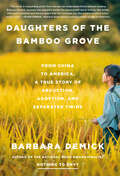
The heartrending story of twin sisters torn apart by China&’s one-child policy and the rise of international adoption—from the author…
of the National Book Award finalist Nothing to Envy&“Excellent . . . entrancing and disturbing . . . [Demick] is one of our finest chroniclers of East Asia. . . . [Her] characters are richly drawn, and her stories, often reported over a span of years, deliver a rare emotional wallop.&”—The New York TimesOn a warm day in September 2000, a woman named Zanhua gave birth to twin girls in a small hut behind her brother&’s home in China&’s Hunan province. The twins, Fangfang and Shuangjie, were welcome additions to her family but also not her first children. Living under the shadow of China&’s notorious one-child policy, Zanhua and her husband decided to leave one twin in the care of relatives, hoping each toddler on their own might stay under the radar. But, in 2002, Fangfang was violently snatched away. The family worried they would never see her again, but they didn&’t imagine she could be sent as far as the United States. She might as well have been sent to another world.Following stories she wrote as the Beijing bureau chief for the Los Angeles Times, Barbara Demick embarks on a journey that encompasses the origins, shocking cruelty, and long-term impact of China&’s one-child rule; the rise of international adoption and the religious currents that buoyed it; and the exceedingly rare phenomenon of twin separation. Today, Esther—formerly Fangfang—lives in Texas, and Demick brings to vivid life the Christian family that felt called to adopt her, unaware that she had been kidnapped. Through Demick&’s indefatigable reporting, will the long-lost sisters finally reunite—and will they feel whole again?A remarkable window into the volatile, constantly changing China of the last half century and the long-reaching legacy of the country&’s most infamous law, Daughters of the Bamboo Grove is also the moving story of two sisters torn apart by the forces of history and brought together again by their families&’ determination and one reporter&’s dogged work.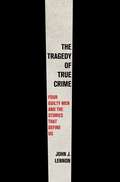
In 2001, John J. Lennon killed a man on a Brooklyn Street. Now he’s a journalist, working from behind bars,…
trying to make sense of it all.The Tragedy of True Crime is a first-person journalistic account of the lives of four men who have killed, written by a man who has killed. Lennon entered the New York prison system with a sentence of 28 years to life but after he stepped into a writing workshop at Attica Correctional Facility, his whole life changed. Reporting from the cell block and the prison yard, Lennon challenges our obsession with true crime by telling the full life stories of men now serving time for the lives they took.These men have completely different backgrounds — Robert Chambers, a preppy Manhattanite turned true crime celebrity; Milton E. Jones, a seventeen-year-old coaxed from burglary into something far darker; and Michael Shane Hale, a gay man caught in a crime of passion — and all are searching to find meaning and redemption behind bars. Lennon’s reporting is intertwined with his own story, from a young man seduced by the infamous gangster culture of New York City to a celebrated prison journalist. The same desire echoes throughout the lives of these four men: to become more than murderers.A first-of-its-kind book of immersive prison journalism, The Tragedy of True Crime poses fundamental questions about the stories we tell and who gets to tell them. What essential truth do we lose when we don’t consider all that comes before an act of unthinkable violence? And what happens to the convicted after the cell gate locks?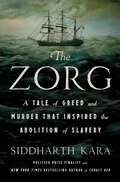
From Pulitzer finalist and New York Times bestselling author of Cobalt Red: A notorious slave ship incident that led to…
the abolition of slavery in the UK and sparked the US abolitionist movementIn late October 1780, a slave ship set sail from the Netherlands, bound for Africa’s Windward and Gold Coasts, where it would take on its human cargo. The Zorg (a Dutch word meaning “care”) was one of thousands of such ships, but the harrowing events that ensued on its doomed journey were unique.After reaching Africa, the Zorg was captured by a privateer and came under British command. With a new captain and crew, the ship was crammed with 442 slaves and departed in 1781 for Jamaica. But a series of unpredictable weather events and mistakes in navigation left the ship drastically off course and running out of water. So a proposition was put forth: Save the crew and the most valuable of the slaves—by throwing dozens of people, starting with women and children, overboard.What followed was a fascinating legal drama in England’s highest court that turned the brutal calculus of slavery into front-page news. The case of the Zorg catapulted the nascent anti-slavery movement from a minor evangelical cause to one of the most consequential moral campaigns in history—sparking the abolitionist movement in both England and the young United States.Siddharth Kara utilizes primary-source research, gripping storytelling, and painstaking investigation to uncover the Zorg’s journey, the lives and fates of the slaves on board, and the mysterious identity of the abolitionist who finally revealed the truth of what happened on the ship.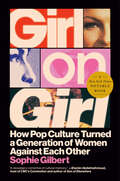
From Atlantic critic and Pulitzer Prize finalist Sophie Gilbert, a blazing critique of how early-aughts pop culture turned women and…
girls against each other—and themselves—with disastrous consequences. An urgent read that addresses questions around the current regression of feminism.When did feminism lose its way? This question feels increasingly urgent in a moment of reactionary cultural and legislative backlash, when widespread uncertainty about the movement&’s power, focus, and currency threatens decades of progress. Sophie Gilbert, a staff writer at The Atlantic and finalist for the Pulitzer Prize in criticism, provides one answer, identifying an inflection point in the late 1990s and early 2000s when the energy of third-wave and &“riot grrrl&” feminism collapsed into a regressive period of hyper-objectification, sexualization, and infantilization. Gilbert mines the darker side of nostalgia, training her keen analytic eye on the most revealing cultural objects of the era, across music, film, television, fashion, tabloid journalism, and more. What she recounts is harrowing, from the unattainable aesthetic of Victoria&’s Secret ads and explicit music videos to a burgeoning internet culture vicious towards women in the spotlight and damaging for those who weren&’t. Gilbert tracks many of the period&’s dominant themes back to the explosion of internet porn, tracing its widespread influence as it began to pervade our collective consciousness. Gilbert paints a devastating picture of an era when a distinctly American confluence of excess, materialism, and power-worship collided with the culture&’s reactionary, puritanical, and chauvinistic currents. Amidst a collective reconsideration of the way women are treated in public, Girl on Girl is a blistering indictment of the matrix of misogyny that undergirded the cultural production of the early twenty-first century, and how it continues to shape our world today.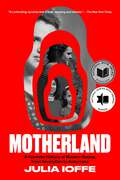
FINALIST FOR THE NATIONAL BOOK AWARD NAMED ONE OF THE 10 BEST BOOKS OF 2025 BY THE WASHINGTON POST NAMED…
ONE OF THE 100 NOTABLE BOOKS OF 2025 BY THE NEW YORK TIMES A GUARDIAN BEST BOOK OF 2025 NAMED ONE OF THE BEST BOOKS OF FALL 2025 BY ELLE ONE OF CHICAGO PUBLIC LIBRARY'S MUST-READ BOOKS OF 2025 Acclaimed journalist Julia Ioffe tells the story of modern Russia through the history of its women, from revolution to utopia to autocracy.In 1990, seven-year-old Julia Ioffe and her family fled the Soviet Union. Nearly twenty years later, Ioffe returned to Moscow—only to discover just how much Russian society had changed while she had been living in America. The Soviet women she had known growing up—doctors, engineers, scientists—seemed to have been replaced by women desperate to marry rich and become stay-at-home moms. How had Russia gone from portraying itself as the vanguard of world feminism to becoming a bastion of conservative Christian values?In Motherland, Ioffe turns modern Russian history on its head, telling it exclusively through the stories of its women. From her own physician great-grandmothers to Lenin&’s lover, a feminist revolutionary; from the hundreds of thousands of Soviet girls who fought in World War II to the millions of single mothers who rebuilt and repopulated a devastated country; from the members of Pussy Riot to Yulia Navalnaya, the wife of opposition leader Alexey Navalny, Ioffe chronicles one of the most audacious social experiments in history and documents how it failed the very women it was meant to liberate—and how that failure paved the way for the revanche of Vladimir Putin.Part memoir, part journalistic exploration, part history, Motherland paints a portrait of modern Russia through the women who shaped it. With deep emotion, Ioffe reveals what it means to live through the cataclysms of revolution, war, idealism, and heartbreak—and how the story of Russia today is inextricably tied to the sacrifices of its women.This meticulously researched history interweaves the personal and the political to explore:The Russian Revolution: Discover the forgotten women who started the revolution, from textile workers on strike to feminist revolutionaries like Alexandra Kollontai.A Grand Social Experiment: Trace the audacious Soviet attempt to emancipate women—and document how its failure paved the way for Vladimir Putin.World War II Through Women's Eyes: Meet the hundreds of thousands of Soviet girls who served as snipers, medics, and fighter pilots in all-female squadrons during the war.Four Generations of a Family: Follow the author’s own remarkable family history, from her great-grandmothers—pioneering female physicians—to her own journey from Soviet refugee to acclaimed journalist.Modern Russia's Matriarchs: From the members of Pussy Riot to Yulia Navalnaya, understand the present through the women shaping Russia's turbulent political landscape today.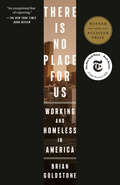
ONE OF THE NEW YORK TIMES AND THE ATLANTIC&’S TEN BEST BOOKS OF THE YEAR • ONE OF BARACK OBAMA&’S…
FAVORITE BOOKS OF THE YEAR • Through the &“revelatory and gut-wrenching&” (Associated Press) stories of five Atlanta families, this landmark work of journalism exposes a new and troubling trend—the dramatic rise of the working homeless in cities across America.&“An exceptional feat of reporting, full of an immediacy that calls to mind Adrian Nicole LeBlanc&’s Random Family and Matthew Desmond&’s Evicted.&”—The New York Times Book Review (Editors&’ Choice)FINALIST FOR THE ANDREW CARNEGIE MEDAL • A BEST BOOK OF THE YEAR: NPR, The Washington Post, Atlanta Journal-Constitution, Elle, New America, BookPage, Shelf AwarenessThe working homeless. In a country where hard work and determination are supposed to lead to success, there is something scandalous about this phrase. But skyrocketing rents, low wages, and a lack of tenant rights have produced a startling phenomenon: People with full-time jobs cannot keep a roof over their head, especially in America&’s booming cities, where rapid growth is leading to catastrophic displacement. These families are being forced into homelessness not by a failing economy but a thriving one.In this gripping and deeply reported book, Brian Goldstone plunges readers into the lives of five Atlanta families struggling to remain housed in a gentrifying, increasingly unequal city. Maurice and Natalia make a fresh start in the country&’s &“Black Mecca&” after being priced out of DC. Kara dreams of starting her own cleaning business while mopping floors at a public hospital. Britt scores a coveted housing voucher. Michelle is in school to become a social worker. Celeste toils at her warehouse job while undergoing treatment for ovarian cancer. Each of them aspires to provide a decent life for their children—and each of them, one by one, joins the ranks of the nation&’s working homeless.Through intimate, novelistic portraits, Goldstone reveals the human cost of this crisis, following parents and their kids as they go to sleep in cars, or in squalid extended-stay hotel rooms, and head out to their jobs and schools the next morning. These are the nation&’s hidden homeless—omitted from official statistics, and proof that overflowing shelters and street encampments are only the most visible manifestation of a far more pervasive problem.By turns heartbreaking and urgent, There Is No Place for Us illuminates the true magnitude, causes, and consequences of the new American homelessness—and shows that it won&’t be solved until housing is treated as a fundamental human right.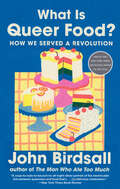
A New York Times Best Book of the Year "A soup-to-nuts-to-brunch-to-all-night-diner portrait of the inextricable link between queerness and food…
that’s…[a] delicious celebration." ?New York Times Book Review A celebrated culinary writer’s expansive, audacious excavation of the roots of modern queer identity and food culture. The food on our plates has long been designed, twisted, and elevated by queer hands. Piecing together a dazzling mosaic of queer lives, spaces, and meals, beloved food writer John Birdsall unfolds the complex story of how, through times of fear and persecution, queer people used food to express joy and build community—and ended up changing the shape of the table for everyone. Tracing the evolution of queer food from the early decades of the twentieth century through the LGBTQ civil rights movement of post-Stonewall liberation and the devastation of AIDS, Birdsall fills the gaps between past and present. He channels the twin forces of criticism and cultural history to propel readers into the kitchens, restaurants, swirling party houses, and buzzing interior lives of James Baldwin, Alice B. Toklas, Truman Capote, Esther Eng, and others who left an indelible mark on the culinary world from the margins. Queer food, as Birdsall brilliantly reveals, is quiche and Champagne eleganza at Sunday brunch and joyous lesbian potlucks in the bunker world of Cold War homophobic purges. It’s paper chicken for the gender-rebel divas of Chinese opera in San Francisco, Richard Olney’s ecstatic salade composée, and Rainbow Ice-Box Cake from Ernest Matthew Mickler’s White Trash Cooking. It’s the intention surrounding a meal, the circumstances behind it, the people gathered around the table. With cinematic verve and delicious prose, What Is Queer Food? is a monumental work: a testament to food’s essential link to modern queerness that reveals how, like fashion or pop music, cooking and eating have become a crucial language of LGBTQ+ identity. By reframing our understanding of both food and queerness, it opens the door for courageous reckoning and boundless conversation.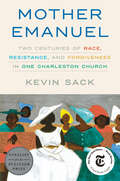
PULITZER PRIZE FINALIST • ONE OF THE NEW YORK TIMES&’ TEN BEST BOOKS OF THE YEAR • A sweeping history…
of one of the nation&’s most important African American churches and a profound story of courage and grace amid the fight for racial justice—from Pulitzer Prize–winning journalist Kevin Sack&“A masterpiece . . . a dense, rich, captivating narrative, featuring vivid prose . . . expansive, inspiring and hugely important.&”—The New York Times (Editors&’ Choice)&“Race, religion, and terror combine for an extraordinary story of America.&”—Eddie S. Glaude, Jr., bestselling author of Begin AgainA BEST BOOK OF THE YEAR: The New York Times Book Review, NPR, Kirkus ReviewsFew people beyond South Carolina&’s Lowcountry knew of Emanuel African Methodist Episcopal Church in Charleston—Mother Emanuel—before the night of June 17, 2015, when a twenty-one-year-old white supremacist walked into Bible study and slaughtered the church&’s charismatic pastor and eight other worshippers. Although the shooter had targeted Mother Emanuel—the first A.M.E. church in the South—to agitate racial strife, he did not anticipate the aftermath: an outpouring of forgiveness from the victims&’ families and a reckoning with the divisions of caste that have afflicted Charleston and the South since the earliest days of European settlement.Mother Emanuel explores the fascinating history that brought the church to that moment and the depth of the desecration committed in its fellowship hall. It reveals how African Methodism was cultivated from the harshest American soil, and how Black suffering shaped forgiveness into both a religious practice and a survival tool. Kevin Sack, who has written about race in his native South for more than four decades, uses the church to trace the long arc of Black life in the city where nearly half of enslaved Africans disembarked in North America and where the Civil War began. Through the microcosm of one congregation, he explores the development of a unique practice of Christianity, from its daring breakaway from white churches in 1817, through the traumas of Civil War and Reconstruction, to its critical role in the Civil Rights Movement and beyond.At its core, Mother Emanuel is an epic tale of perseverance, not just of a congregation but of a people who withstood enslavement, Jim Crow, and all manner of violence with an unbending faith.