Title search results
Showing 1 - 2 of 2 items
Braille (Contracted), Electronic braille (Contracted), DAISY Audio (Direct to Player), DAISY Audio (Zip), DAISY text (Direct to player), DAISY text (Zip), Word (Zip), ePub (Zip)
United States history, Lifestyle
Synthetic audio, Automated braille
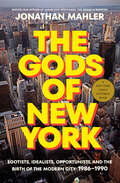
A sweeping chronicle of four tumultuous years in 1980s New York that changed the city forever—and anticipated the forces that…
would soon divide the nation—from the bestselling author of Ladies and Gentlemen, the Bronx Is Burning&“A rip-roaring, sweeping, essential work of history . . . a deeply reported and brilliantly observed account of how the modern city was born and why all of us continue to live with the results.&”—Jonathan Eig, Pulitzer Prize–winning author of King: A LifeNew York entered 1986 as a city reborn. Record profits on Wall Street sent waves of money splashing across Manhattan, bringing a battered city roaring back to life.But it also entered 1986 as a city whose foundation was beginning to crack. Thousands of New Yorkers were sleeping in the streets, addicted to drugs, dying of AIDS, or suffering from mental illnesses. Nearly one-third of the city&’s Black and Hispanic residents were living below the federal poverty line. Long-simmering racial tensions threatened to boil over.The events of the next four years would split the city open. Howard Beach. Black Monday. Tawana Brawley. The crack epidemic. The birth of ACT UP. The Central Park jogger. The release of Do the Right Thing. And a cast of outsized characters—Ed Koch, Donald Trump, Al Sharpton, Spike Lee, Rudy Giuliani, Larry Kramer—would compete to shape the city&’s future while building their own mythologies.The Gods of New York is a kaleidoscopic and deeply immersive portrait of a city whose identity was suddenly up for grabs: Could it be both the great working-class city that lifted up immigrants from around the world and the money-soaked capital of global finance? Could it retain a civic culture—a common idea of what it meant to be a New Yorker—when the rich were building a city of their own and vast swaths of its citizens were losing faith in the systems meant to protect them? New York City was one thing at the dawn of 1986; it would be something very different as 1989 came to a close. This is the story of how that happened.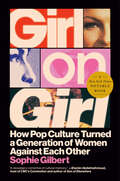
Braille (Contracted), Electronic braille (Contracted), DAISY Audio (Direct to Player), DAISY Audio (Zip), DAISY text (Direct to player), DAISY text (Zip), Word (Zip), ePub (Zip)
Customs and cultures, Lifestyle, General non-fiction
Synthetic audio, Automated braille
From Atlantic critic and Pulitzer Prize finalist Sophie Gilbert, a blazing critique of how early-aughts pop culture turned women and…
girls against each other—and themselves—with disastrous consequences. An urgent read that addresses questions around the current regression of feminism.When did feminism lose its way? This question feels increasingly urgent in a moment of reactionary cultural and legislative backlash, when widespread uncertainty about the movement&’s power, focus, and currency threatens decades of progress. Sophie Gilbert, a staff writer at The Atlantic and finalist for the Pulitzer Prize in criticism, provides one answer, identifying an inflection point in the late 1990s and early 2000s when the energy of third-wave and &“riot grrrl&” feminism collapsed into a regressive period of hyper-objectification, sexualization, and infantilization. Gilbert mines the darker side of nostalgia, training her keen analytic eye on the most revealing cultural objects of the era, across music, film, television, fashion, tabloid journalism, and more. What she recounts is harrowing, from the unattainable aesthetic of Victoria&’s Secret ads and explicit music videos to a burgeoning internet culture vicious towards women in the spotlight and damaging for those who weren&’t. Gilbert tracks many of the period&’s dominant themes back to the explosion of internet porn, tracing its widespread influence as it began to pervade our collective consciousness. Gilbert paints a devastating picture of an era when a distinctly American confluence of excess, materialism, and power-worship collided with the culture&’s reactionary, puritanical, and chauvinistic currents. Amidst a collective reconsideration of the way women are treated in public, Girl on Girl is a blistering indictment of the matrix of misogyny that undergirded the cultural production of the early twenty-first century, and how it continues to shape our world today.