Title search results
Showing 1 - 4 of 4 items
Braille (Contracted), Electronic braille (Contracted), DAISY Audio (Direct to Player), DAISY Audio (Zip), DAISY text (Direct to player), DAISY text (Zip), Word (Zip), ePub (Zip)
Science and medicine biography, Business and economics
Synthetic audio, Automated braille
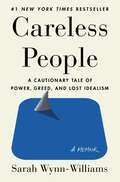
#1 New York Times Bestseller“Careless People is darkly funny and genuinely shocking...Not only does [Sarah Wynn-Williams] have the storytelling chops…
to unspool a gripping narrative; she also delivers the goods." -Jennifer Szalai, The New York Times “When one of the world’s most powerful media companies tries to snuff out a book — amid other alarming attacks on free speech in America like this — it’s time to pull out all the stops.” –Ron Charles, The Washington Post An explosive memoir charting one woman’s career at the heart of one of the most influential companies on the planet, Careless People gives you a front-row seat to Facebook, the decisions that have shaped world events in recent decades, and the people who made them. From trips on private jets and encounters with world leaders to shocking accounts of misogyny and double standards behind the scenes, this searing memoir exposes both the personal and the political fallout when unfettered power and a rotten company culture take hold. In a gripping and often absurd narrative where a few people carelessly hold the world in their hands, this eye-opening memoir reveals what really goes on among the global elite. Sarah Wynn-Williams tells the wrenching but fun story of Facebook, mapping its rise from stumbling encounters with juntas to Mark Zuckerberg’s reaction when he learned of Facebook’s role in Trump’s election. She experiences the challenges and humiliations of working motherhood within a pressure cooker of a workplace, all while Sheryl Sandberg urges her and others to “lean in.” Careless People is a deeply personal account of why and how things have gone so horribly wrong in the past decade—told in a sharp, candid, and utterly disarming voice. A deep, unflinching look at the role that social media has assumed in our lives, Careless People reveals the truth about the leaders of Facebook: how the more power they grasp, the less responsible they become and the consequences this has for all of us.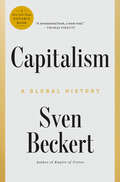
Braille (Contracted), Electronic braille (Contracted), DAISY Audio (Direct to Player), DAISY Audio (Zip), DAISY text (Direct to player), DAISY text (Zip), Word (Zip), ePub (Zip)
Business and economics, History
Synthetic audio, Automated braille
A landmark event years in the making, a brilliant global narrative that unravels the defining story of the past thousand…
years of human historyNo other phenomenon has shaped human history as decisively as capitalism. It structures how we live and work, how we think about ourselves and others, how we organize our politics. Sven Beckert, author of the Bancroft Prize–winning Empire of Cotton, places the story of capitalism within the largest conceivable geographical and historical framework, tracing its history during the past millennium and across the world. An epic achievement, his book takes us into merchant businesses in Aden and car factories in Turin, onto the terrifyingly violent sugar plantations in Barbados, and within the world of women workers in textile factories in today&’s Cambodia.Capitalism, argues Beckert, was born global. Emerging from trading communities across Asia, Africa, and Europe, capitalism&’s radical recasting of economic life rooted itself only gradually. But then it burst onto the world scene, as a powerful alliance between European states and merchants propelled them, and their economic logic, across the oceans. This, Beckert shows, was modern capitalism&’s big bang, and one of its epicenters was the slave labor camps of the Caribbean. This system, with its hierarchies that haunt us still, provided the liftoff for the radical transformations of the Industrial Revolution. Fueled by vast productivity increases along with coal and oil, capitalism pulled down old ways of life to crown itself the defining force of the modern world. This epic drama, shaped by state-backed institutions and imperial expansion, corresponded at no point to an idealized dream of free markets.Drawing on archives on six continents, Capitalism locates important modes of agency, resistance, innovation, and ruthless coercion everywhere in the world, opening the aperture from heads of state to rural cultivators. Beckert shows that despite the dependence on expansion, there always have been, and are still, areas of human life that the capitalist revolution has yet to reach. By chronicling capitalism&’s global history, Beckert exposes the reality of the system that now seems simply &“natural.&” It is said that people can more easily imagine the end of the world than the end of capitalism. If there is one ultimate lesson in this extraordinary book, it&’s how to leave that behind. Though cloaked in a false timelessness and universality, capitalism is, in reality, a recent human invention. Sven Beckert doesn&’t merely tote up capitalism&’s debits and credits. He shows us how to look through and beyond it to imagine a different and larger world.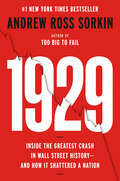
Braille (Contracted), Electronic braille (Contracted), DAISY Audio (Direct to Player), DAISY Audio (Zip), DAISY text (Direct to player), DAISY text (Zip), Word (Zip), ePub (Zip)
Business and economics, United States history
Synthetic audio, Automated braille
#1 NEW YORK TIMES BESTSELLER&“It is one of the best narrative histories I&’ve read.&”—The Wall Street JournalA New York Times…
Notable Book of 2025 • One of Barack Obama's Favorite Books of 2025 • Named a BEST BOOK OF 2025 by The Washington Post, TIME, The Economist, Air Mail, Bloomberg, Fast Company, Katie Couric Media, and HistoryFrom the bestselling author of Too Big to Fail, &“the definitive history of the 2008 banking crisis,&” (The Atlantic) comes a riveting narrative of the most infamous stock market crash in history—one with ripple effects that still shape our society today.In 1929, the world watched in shock as the unstoppable Wall Street bull market went into a freefall, wiping out fortunes and igniting a depression that would reshape a generation. But behind the flashing ticker tapes and panicked traders, another drama unfolded—one of visionaries and fraudsters, titans and dreamers, euphoria and ruin.With unparalleled access to historical records and newly uncovered documents, New York Times bestselling author Andrew Ross Sorkin takes readers inside the chaos of the crash, behind the scenes of a raging battle between Wall Street and Washington and the larger-than-life characters whose ambition and naïveté in an endless boom led to disaster. The dizzying highs and brutal lows of this era eerily mirror today&’s world—where markets soar, political tensions mount, and the fight over financial influence plays out once again.This is not just a story about money. 1929 is a tale of power, psychology, and the seductive illusion that this time is different. It&’s about disregarded alarm bells, financiers who fell from grace, and skeptics who saw the crash coming—only to be dismissed until it was too late.Hailed as a landmark book, Too Big to Fail reimagined how financial crises are told. Now, with 1929, Sorkin delivers an immersive, electrifying account of the most pivotal market collapse of all time—with lessons that remain as urgent as ever. More than just a history, 1929 is a crucial blueprint for understanding the cycles of speculation, the forces that drive financial upheaval, and the warning signs we ignore at our peril.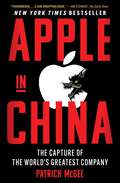
Braille (Contracted), Electronic braille (Contracted), DAISY Audio (Direct to Player), DAISY Audio (Zip), DAISY text (Direct to player), DAISY text (Zip), Word (Zip), ePub (Zip)
Business and economics, Economics, Politics and government
Synthetic audio, Automated braille
&“Phenomenal…a jaw-dropping book.&” —Jon Stewart, The Daily Show Named by The New York Times, The New Yorker, and Prospect magazine…
as a best book of the year, this &“scrupulously reported&” (The New Yorker) and &“astonishing&” (The Daily Telegraph, London) book rivets with its portrayal of how Apple allowed itself to become dependent on China for a huge percentage of its manufacturing, making it vulnerable and unwittingly laying the groundwork for the Asian superpower to rival the US in technological expertise.After struggling to build products on three continents, Apple turned to China&’s seemingly endless supply of cheap labor. It soon deployed thousands of engineers, trained millions of workers, and invested hundreds of billions of dollars to create the most advanced global supply chain. These efforts fueled the iPhone&’s dominance—but also laid the foundation for a powerful, state-supported Chinese electronics industry. What began as a business decision evolved into a cautionary tale of global trade, tech rivalry, and national security. Without intending to, Apple helped Beijing acquire technological influence that could now be weaponized—a central concern in the ongoing US-China tech war. Drawing on over two hundred interviews, Patrick McGee exposes never-before-reported details from Silicon Valley to Shenzhen: internal emails, secretive executive meetings, and overlooked voices inside the company&’s China operations. You&’ll meet the &“Gang of Eight&” executives tasked with appeasing Beijing, a Mormon missionary who launched Apple retail in China, and a veteran whose dreams of improving factory conditions were crushed by both Apple&’s demands and Xi Jinping&’s authoritarian crackdown. From Foxconn and Tim Cook to the Chinese Communist Party and Taiwan Semiconductor, this is a revelatory look at how Apple, in seeking efficiency, became entangled in the very politics it once claimed to challenge. For readers of Chip War, American Factory, and The Big Short, Apple in China is a searing examination of corporate power, Chinese nationalism, deglobalization, and the fragile relationship between Silicon Valley and the world&’s rising superpower.