Service Alert

Fermeture hâtive le lundi 15 juin

En raison de circonstances imprévues, notre Centre de contact français sera fermé aujourd'hui (lundi 15 juin) à 16h45, heure de l'Est. Les heures normales de service reprendront le mardi 16 juin. On s'excuse pour tout inconvénient que ça pourrait occasionner.
Services de bibliothèque publique pour les Canadiens incapables de lire les imprimés
  • Astuces d'accessibilité pour appareils mobiles
    • Modifier le contraste
      • AJaune sur fond noir sélectionné
      • ANoir sur fond jaune sélectionné
      • ABlanc sur fond noir sélectionné
      • ANoir sur fond blanc sélectionné
      • AContraste par défaut sélectionné
    • Modifier la taille du texte
      • Taille du texte Petit sélectionné
      • Taille du texte Moyen sélectionné
      • Taille du texte Grand sélectionné
      • Taille du texte Maximum sélectionné
    • Modifier la police du texte
      • Arial sélectionné
      • Verdana sélectionné
      • Comic Sans MS sélectionné
    • Ajuster l'espacement entre les lignes de texte
      • Étroit sélectionné
      • Moyen sélectionné
      • Grand sélectionné
  • Abonnement
  • Se connecter
  • English
  • Accueil
  • Journaux
  • Magazines
  • Recommandations
  • Pour bibliothèques
  • Aide
  • Passer au contenu
      • Modifier le contraste
        • AJaune sur fond noir sélectionné
        • ANoir sur fond jaune sélectionné
        • ABlanc sur fond noir sélectionné
        • ANoir sur fond blanc sélectionné
        • AContraste par défaut sélectionné
      • Modifier la taille du texte
        • Taille du texte Petit sélectionné
        • Taille du texte Moyen sélectionné
        • Taille du texte Grand sélectionné
        • Taille du texte Maximum sélectionné
      • Modifier la police du texte
        • Arial sélectionné
        • Verdana sélectionné
        • Comic Sans MS sélectionné
      • Ajuster l'espacement entre les lignes de texte
        • Étroit sélectionné
        • Moyen sélectionné
        • Grand sélectionné
  • Astuces d'accessibilité
Services de bibliothèque publique pour les Canadiens incapables de lire les imprimés

Centre d'accès équitable aux bibliothèques
Services de bibliothèque publique pour les Canadiens incapables de lire les imprimés

  • Abonnement
  • Se connecter
  • English
  • Accueil
  • Journaux
  • Magazines
  • Recommandations
  • Pour bibliothèques
  • Aide
  • Recherche avancée
  • Explorer par catégorie
  • Conseils de recherche
Fil d'Ariane
  1. Accueil
  2. Résultats de recherche de titre
  3. Résultats de recherche de titre

Résultats de recherche de titre

Aller aux filtres

Articles 1 à 8 sur 8

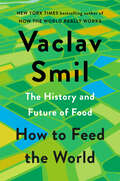
How to feed the world: The history and future of food

Par Vaclav Smil. 2025

DAISY audio (Téléchargement direct), DAISY audio (Zip)
Environnement, Sciences et technologies
Audio avec voix humaine

"Vaclav Smil is my favorite author." — Bill Gates An indispensable analysis of how the world really produces and consumes…

its food — and a scientist's exploration of how we can successfully feed a growing population without killing the planet We have never had to feed as many people as we do today. And yet, we misunderstand the essentials of where our food really comes from, how our dietary requirements shape us, and why this impacts our planet in drastic ways. As a result, in our economic, political, and everyday choices, we take for granted and fail to prioritize the thing that makes all our lives possible: food. In this ambitious, myth-busting book, Smil investigates many of the burning questions facing the world today: why are some of the world’s biggest food producers also the countries with the most undernourished populations? Why do we waste so much food and how can we solve that? Could the whole planet go vegan and be healthy? Should it? He explores the global history of food production to understand why we farm some animals and not others, why most of the world’s calories come from just a few foodstuffs, and how this might change in the future. How to Feed the World is the data-based, rigorously researched guide that offers solutions to our broken global food system

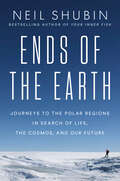
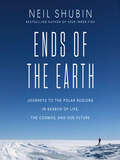
Ends of the earth: Journeys to the polar regions in search of life, the cosmos, and our future

Par Neil Shubin. 2025

DAISY audio (Téléchargement direct), DAISY audio (Zip)
Sciences et technologies, Environnement
Audio avec voix humaine

The bestselling author of Your Inner Fish takes readers on an epic adventure to the North and South Poles to…

reveal the secrets locked in the ice about life, the cosmos, and our planet’s future. “Urgent [and] prescient…The book captures Shubin’s reverence for both the beauty and the mysteries hidden in the cold, barren tundra.”— The New Yorker Renowned scientist Neil Shubin has made extraordinary discoveries by leading scientific expeditions to the sweeping ice landscapes of the Arctic and Antarctic. He’s survived polar storms, traveled in temperatures that can freeze flesh in seconds, and worked hundreds of miles from the nearest humans, all to deepen our understanding of our world. Written with infectious enthusiasm and irresistible curiosity, Ends of the Earth blends travel writing, science, and history in a book brimming with surprising and wonderful discoveries. Shubin retraces his steps on a “dinosaur dance floor,” showing us where these beasts had populated the once tropical lands at the poles. He takes readers meteor hunting, as meteorites preserved in the ice can be older than our planet and can tell us about our galaxy’s formation. Readers also encounter insects and fish that develop their own anti-freeze, and aquatic life in ancient lakes hidden miles under the ice that haven’t seen the surface in centuries. It turns out that explorers and scientists have found these extreme environments as prime ground for making scientific breakthroughs across a vast range of knowledge. Shubin shares unforgettable moments from centuries of expeditions to reveal just how far scientists will go to understand polar regions. In the end, what happens at the poles does not stay in the poles—the ends of the earth offer profound stories that will forever change our view of life and the entire planet

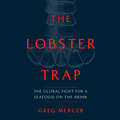
The Lobster Trap: The Global Fight for a Seafood on the Brink

Par Greg Mercer. 2025

DAISY audio (Téléchargement direct), DAISY audio (Zip)
Nourriture et boissons , Animaux et faune, Sciences et technologies, Affaires et économie
Audio avec voix humaine

A page-turning examination of how a multi-billion dollar industry creates enormous wealth and endless heartache, at a time when climate…

change, swings in the market, and greed are impacting fishermen’s livelihoods in new and dramatic ways.Lobster has been a phenomenal success story, with a commercial fishery that has generated enormous wealth and fuelled appetites for one of the world’s most recognizable luxury foods. The great lobster boom that began in the 1990s has also led to violent fights over who has the right to catch this valuable seafood, including many Indigenous people in Canada, who until recently have been excluded from this industry. Now overfishing, trade wars, and climate change are threatening the future of this fishery in deeply troubling ways.By 2050, scientists expect that warming ocean waters in the heart of North America’s lobster fishing region will cut catches by two thirds. In some parts of America, there’s hardly any lobster left to catch. Unlike previous collapses, there are few other large-scale wild seafood species left that fishing crews can switch to. The economic upheaval for fishermen and seafood companies alike could devastate coastal communities in both Canada and the United States.In this deeply reported, resonant, timely book, Greg Mercer takes readers on a fascinating global journey and inside this precarious moment for the lobster industry, to show the money and heartache, and the danger and violence, tied up in it. Along the way, he explores lobster’s remarkable history, the gold-rush mentality that surrounds it, and examines the looming crisis for this most precious shellfish.

Ends of the Earth: Journeys to the Polar Regions in Search of Life, the Cosmos, and Our Future

Par Null Neil Shubin. 2025

Braille (abrégé), Braille électronique (abrégé), DAISY Audio (Téléchargement Direct), DAISY Audio (Zip), DAISY texte (Téléchargement direct), DAISY texte (Zip), Word (Zip), ePub (Zip)
Environnement, Sciences et technologies
Audio avec voix de synthèse, Braille automatisé

The bestselling author of Your Inner Fish takes readers on an epic adventure to the North and South Poles to reveal…

the secrets locked in the ice about life, the cosmos, and our planet&’s future. Renowned scientist Neil Shubin has made extraordinary discoveries by leading scientific expeditions to the sweeping ice landscapes of the Arctic and Antarctic. He&’s survived polar storms, traveled in temperatures that can freeze flesh in seconds, and worked hundreds of miles from the nearest humans, all to deepen our understanding of our world.   Written with infectious enthusiasm and irresistible curiosity, Ends of the Earth blends travel writing, science, and history in a book brimming with surprising and wonderful discoveries. Shubin retraces his steps on a &“dinosaur dance floor,&” showing us where these beasts had populated the once tropical lands at the poles. He takes readers meteor hunting, as meteorites preserved in the ice can be older than our planet and can tell us about our galaxy&’s formation. Readers also encounter insects and fish that develop their own anti-freeze, and aquatic life in ancient lakes hidden miles under the ice that haven&’t seen the surface in centuries. It turns out that explorers and scientists have found these extreme environments as prime ground for making scientific breakthroughs across a vast range of knowledge.   Shubin shares unforgettable moments from centuries of expeditions to reveal just how far scientists will go to understand polar regions. In the end, what happens at the poles does not stay in the poles—the ends of the earth offer profound stories that will forever change our view of life and the entire planet.

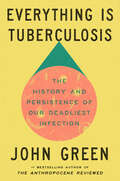
Everything Is Tuberculosis: The History and Persistence of Our Deadliest Infection

Par John Green. 2025

Braille (abrégé), Braille électronique (abrégé), DAISY Audio (Téléchargement Direct), DAISY Audio (Zip), DAISY texte (Téléchargement direct), DAISY texte (Zip), Word (Zip), ePub (Zip)
Médecine, Sciences et technologies, Essais et documents généraux
Audio avec voix de synthèse, Braille automatisé

John Green, the #1 bestselling author of The Anthropocene Reviewed and a passionate advocate for global healthcare reform, tells a…

deeply human story illuminating the fight against the world’s deadliest infectious disease. “This highly readable call to action could not be more timely.” –Kirkus, starred review. “Mem­orably probes the intersections of medicine and human emotion.” –Bookpage, starred review. Tuberculosis has been entwined with hu­manity for millennia. Once romanticized as a malady of poets, today tuberculosis is seen as a disease of poverty that walks the trails of injustice and inequity we blazed for it. In 2019, author John Green met Henry Reider, a young tuberculosis patient at Lakka Government Hospital in Sierra Leone. John be­came fast friends with Henry, a boy with spindly legs and a big, goofy smile. In the years since that first visit to Lakka, Green has become a vocal advocate for increased access to treatment and wider awareness of the healthcare inequi­ties that allow this curable, preventable infec­tious disease to also be the deadliest, killing over a million people every year. In Everything Is Tuberculosis, John tells Henry’s story, woven through with the scientific and social histories of how tuberculosis has shaped our world—and how our choices will shape the future of tuberculosis. New York Times Bestseller

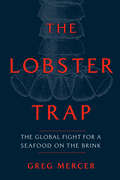
The Lobster Trap: The Global Fight for a Seafood on the Brink

Par Greg Mercer. 2025

Braille (abrégé), Braille électronique (abrégé), DAISY Audio (Téléchargement Direct), DAISY Audio (Zip), DAISY texte (Téléchargement direct), DAISY texte (Zip), Word (Zip), ePub (Zip)
Affaires et économie, Animaux et faune, Sciences et technologies
Audio avec voix de synthèse, Braille automatisé

A page-turning examination of how a multi-billion dollar industry creates enormous wealth and endless heartache, at a time when climate…

change, swings in the market, and greed are impacting fishermen&’s livelihoods in new and dramatic ways.Lobster has been a phenomenal success story, with a commercial fishery that has generated enormous wealth and fuelled appetites for one of the world&’s most recognizable luxury foods. The great lobster boom that began in the 1990s has also led to violent fights over who has the right to catch this valuable seafood, including many Indigenous people in Canada, who until recently have been excluded from this industry. Now overfishing, trade wars, and climate change are threatening the future of this fishery in deeply troubling ways.By 2050, scientists expect that warming ocean waters in the heart of North America&’s lobster fishing region will cut catches by two thirds. In some parts of America, there&’s hardly any lobster left to catch. Unlike previous collapses, there are few other large-scale wild seafood species left that fishing crews can switch to. The economic upheaval for fishermen and seafood companies alike could devastate coastal communities in both Canada and the United States.In this deeply reported, resonant, timely book, Greg Mercer takes readers on a fascinating global journey and inside this precarious moment for the lobster industry, to show the money and heartache, and the danger and violence, tied up in it. Along the way, he explores lobster&’s remarkable history, the gold-rush mentality that surrounds it, and examines the looming crisis for this most precious shellfish.

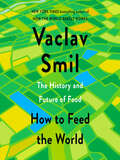
How to Feed the World: The History and Future of Food

Par Vaclav Smil. 2024

Braille (abrégé), Braille électronique (abrégé), DAISY Audio (Téléchargement Direct), DAISY Audio (Zip), DAISY texte (Téléchargement direct), DAISY texte (Zip), Word (Zip), ePub (Zip)
Sciences et technologies
Audio avec voix de synthèse, Braille automatisé

"Vaclav Smil is my favorite author."—Bill GatesAn indispensable analysis of how the world really produces and consumes its food—and a…

scientist's exploration of how we can successfully feed a growing population without killing the planetWe have never had to feed as many people as we do today. And yet, we misunderstand the essentials of where our food really comes from, how our dietary requirements shape us, and why this impacts our planet in drastic ways. As a result, in our economic, political, and everyday choices, we take for granted and fail to prioritize the thing that makes all our lives possible: food.In this ambitious, myth-busting book, Smil investigates many of the burning questions facing the world today: why are some of the world&’s biggest food producers also the countries with the most undernourished populations? Why do we waste so much food and how can we solve that? Could the whole planet go vegan and be healthy? Should it? He explores the global history of food production to understand why we farm some animals and not others, why most of the world&’s calories come from just a few foodstuffs, and how this might change in the future.How to Feed the World is the data-based, rigorously researched guide that offers solutions to our broken global food system.

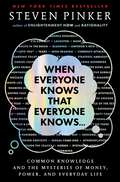
When Everyone Knows That Everyone Knows . . .: Common Knowledge and the Mysteries of Money, Power, and Everyday Life

Par Steven Pinker. 2025

Braille (abrégé), Braille électronique (abrégé), DAISY Audio (Téléchargement Direct), DAISY Audio (Zip), DAISY texte (Téléchargement direct), DAISY texte (Zip), Word (Zip), ePub (Zip)
Psychologie, Sciences et technologies, Essais et documents généraux
Audio avec voix de synthèse, Braille automatisé

From one of the world&’s most celebrated intellectuals, a &“fascinating&” (Financial Times), brilliantly insightful work that explains how we think…

about each other&’s thoughts about each other&’s thoughts, ad infinitum. It sounds impossible, but &“superlatively gifted science writer&” (The Times) Steven Pinker shows that we do it all the time. This awareness, which we experience as something that is public or &“out there,&” is called common knowledge, and it has a momentous impact on our social, political, and economic lives.Common knowledge is necessary for coordination, for making arbitrary but complementary choices like driving on the right, using paper currency, and coalescing behind a political leader or movement. It&’s also necessary for social coordination: everything from rendezvousing at a time and place to speaking the same language to forming enduring relationships of friendship, romance, or authority. Humans have a sixth sense for common knowledge, and we create it with signals like laughter, tears, blushing, eye contact, and blunt speech. But people also go to great lengths to avoid common knowledge—to ensure that even if everyone knows something, they can&’t know that everyone else knows they know it. And so we get rituals like benign hypocrisy, veiled bribes and threats, sexual innuendo, and pretending not to see the elephant in the room. Pinker shows how the hidden logic of common knowledge can make sense of many of life&’s enigmas: financial bubbles and crashes, revolutions that come out of nowhere, the posturing and pretense of diplomacy, the eruption of social media shaming mobs and academic cancel culture, the awkwardness of a first date. Artists and humorists have long mined the intrigues of common knowledge, and Pinker liberally uses their novels, jokes, cartoons, films, and sitcom dialogues to illuminate social life&’s tragedies and comedies. Along the way he answers questions like: -Why do people hoard toilet paper at the first sign of an emergency? -Why are Super Bowl ads dominated by crypto? -Why, in American presidential primary voting, do citizens typically select the candidate they believe is preferred by others rather than their favorite? -Why did Russian authorities arrest a protester who carried a blank sign? -Why is it so hard for nervous lovers to say goodbye at the end of a phone call? -Why does everyone agree that if we were completely honest all the time, life would be unbearable? Consistently riveting in explaining the paradoxes of human behavior, and &“one of the most insightful books…about what makes us human&” (Bill Gates), When Everyone Knows That Everyone Knows… invites us to understand the ways we try to get into each other&’s heads and the harmonies, hypocrisies, and outrages that result.

Limiter les résultats de recherche

Limiter les résultats de recherche

Préciser par date

Pour supprimer ces filtres, sélectionnez Tout le contenu.

Date d'acquisition

Date de publication

Foire aux questions

Quels appareils puis-je utiliser pour lire les livres et magazines du CAÉB

Réponse : Nos livres et magazines sont compatibles avec plusieurs appareils et applications de lecture accessibles. Consultez notre page Appareils et formats compatibles pour en savoir plus.

Foire aux questions

À propos

Le Centre d'accès équitable aux bibliothèques (CAÉB) offre le service de lecture accessible, mettant à la disposition des Canadiens incapables de lire les imprimés des livres et d'autres documents sur le support de leur choix.

  • En savoir plus sur le CAÉB
  • Confidentialité
  • Modalités sur l’utilisation acceptable
  • Bibliothèques membres

Suivez-nous

Tenez-vous au courant de toutes les actualités du CAEB.

  • Inscrivez-vous à nos bulletins
  • Blogue
  • Facebook
  • Bluesky
  • Twitter
  • Youtube

Boîte de suggestions

  • Suggérer un titre
  • Rapporter un livre endommagé
  • Adhésion au Groupe consultatif des utilisateurs
  • Adhésion au Groupe consultatif des enseignants
  • Réexamen de documents

Nous joindre

Besoin d'aide? aide@bibliocaeb.ca ou 1-855-655-2273.

Visitez la pageNous joindrepour plus de détails.

Copyright 2026 CAÉB. Tous droits réservés.