Title search results
Showing 1 - 7 of 7 items
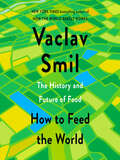
"Vaclav Smil is my favorite author." — Bill Gates An indispensable analysis of how the world really produces and consumes…
its food — and a scientist's exploration of how we can successfully feed a growing population without killing the planet We have never had to feed as many people as we do today. And yet, we misunderstand the essentials of where our food really comes from, how our dietary requirements shape us, and why this impacts our planet in drastic ways. As a result, in our economic, political, and everyday choices, we take for granted and fail to prioritize the thing that makes all our lives possible: food. In this ambitious, myth-busting book, Smil investigates many of the burning questions facing the world today: why are some of the world’s biggest food producers also the countries with the most undernourished populations? Why do we waste so much food and how can we solve that? Could the whole planet go vegan and be healthy? Should it? He explores the global history of food production to understand why we farm some animals and not others, why most of the world’s calories come from just a few foodstuffs, and how this might change in the future. How to Feed the World is the data-based, rigorously researched guide that offers solutions to our broken global food system
An intimate account of an epic walking journey through a tense and shifting Europe in the footsteps of one extraordinary…
wolf.In the winter of 2011, a young wolf, named Slavc by the scientists who collared him, left his natal pack's territory in Slovenia, embarking on what would become a two thousand kilometre trek to northern Italy. There, he found a mate—named Juliet—and they produced the first pack in the region in a hundred years. A decade later, captivated by Slavc's journey, Adam Weymouth set out to walk the same route. As he made his way through mountainous terrain, villages and farmland, he bore witness to the fears and harsh realities of those living on the margins of rural society at a time of deep political and social flux, for whom the surging wolf population posed an existential threat. In Lone Wolf, Weymouth interrogates how the wolf—loved and loathed, vilified and romanticized throughout history—is re-emerging in wild and cultivated landscapes; how the borders between us and them are slipping away; and what our deep-rooted fear of the mysterious creature really means.Sharply observed, searching, poetic and revealing, Lone Wolf is a story of wildness and of the human desire for order in an ever-evolving world.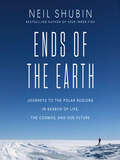
The bestselling author of Your Inner Fish takes readers on an epic adventure to the North and South Poles to…
reveal the secrets locked in the ice about life, the cosmos, and our planet’s future. “Urgent [and] prescient…The book captures Shubin’s reverence for both the beauty and the mysteries hidden in the cold, barren tundra.”— The New Yorker Renowned scientist Neil Shubin has made extraordinary discoveries by leading scientific expeditions to the sweeping ice landscapes of the Arctic and Antarctic. He’s survived polar storms, traveled in temperatures that can freeze flesh in seconds, and worked hundreds of miles from the nearest humans, all to deepen our understanding of our world. Written with infectious enthusiasm and irresistible curiosity, Ends of the Earth blends travel writing, science, and history in a book brimming with surprising and wonderful discoveries. Shubin retraces his steps on a “dinosaur dance floor,” showing us where these beasts had populated the once tropical lands at the poles. He takes readers meteor hunting, as meteorites preserved in the ice can be older than our planet and can tell us about our galaxy’s formation. Readers also encounter insects and fish that develop their own anti-freeze, and aquatic life in ancient lakes hidden miles under the ice that haven’t seen the surface in centuries. It turns out that explorers and scientists have found these extreme environments as prime ground for making scientific breakthroughs across a vast range of knowledge. Shubin shares unforgettable moments from centuries of expeditions to reveal just how far scientists will go to understand polar regions. In the end, what happens at the poles does not stay in the poles—the ends of the earth offer profound stories that will forever change our view of life and the entire planet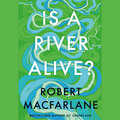
From the celebrated writer, observer and naturalist Robert Macfarlane comes a brilliant, perspective-shifting new book, which answers a resounding "yes"…
to the question of its title.At the heart of Is a River Alive? is a single, transformative idea: that rivers are not mere matter for human use, but living beings, who should be recognized as such in both imagination and law. Macfarlane takes the reader on a mind-expanding global journey into the history, futures, people and places of the ancient, urgent concept.Around the world, rivers are dying from pollution, drought and damming. But a powerful movement is also underway to recognize the lives and the rights of rivers, and to re-animate our relationships with these vast, mysterious presences whose landscapes we share. The young "rights of nature" movement has lit up activists, artists, law-makers and politicians across six continents—and become the focus for revolutionary thinking about rivers in particular.The book flows like water, from the mountains to the sea, over three major journeys. The first is to northern Ecuador, where a miraculous cloud-forest and its rivers are threatened with destruction by Canadian gold-mining. The second is to the wounded rivers, creeks and lagoons of southern India, where a desperate battle to save the lives of these waterbodies is underway. The third is to northeastern Quebec, where a spectacular wild river—the Mutehekau or Magpie—is being defended from death by damming in a river-rights campaign led by an extraordinary Innu poet and leader called Rita Mestokosho.Is A River Alive? is at once a literary work of art, a rallying cry and a catalyst for change. It is a book that will open hearts, spark debates and challenge perspectives. A clarion call to re-centre rivers in our stories, law and politics, it invites us to radically re-imagine not only rivers but life itself. At the heart of this vital, beautiful book is the recognition that our fate flows with that of rivers—and always has.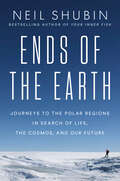
The bestselling author of Your Inner Fish takes readers on an epic adventure to the North and South Poles to reveal…
the secrets locked in the ice about life, the cosmos, and our planet&’s future. Renowned scientist Neil Shubin has made extraordinary discoveries by leading scientific expeditions to the sweeping ice landscapes of the Arctic and Antarctic. He&’s survived polar storms, traveled in temperatures that can freeze flesh in seconds, and worked hundreds of miles from the nearest humans, all to deepen our understanding of our world. Written with infectious enthusiasm and irresistible curiosity, Ends of the Earth blends travel writing, science, and history in a book brimming with surprising and wonderful discoveries. Shubin retraces his steps on a &“dinosaur dance floor,&” showing us where these beasts had populated the once tropical lands at the poles. He takes readers meteor hunting, as meteorites preserved in the ice can be older than our planet and can tell us about our galaxy&’s formation. Readers also encounter insects and fish that develop their own anti-freeze, and aquatic life in ancient lakes hidden miles under the ice that haven&’t seen the surface in centuries. It turns out that explorers and scientists have found these extreme environments as prime ground for making scientific breakthroughs across a vast range of knowledge. Shubin shares unforgettable moments from centuries of expeditions to reveal just how far scientists will go to understand polar regions. In the end, what happens at the poles does not stay in the poles—the ends of the earth offer profound stories that will forever change our view of life and the entire planet.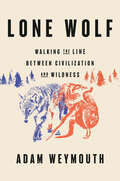
An intimate account of an epic walking journey through a tense and shifting Europe in the footsteps of one extraordinary…
wolf.In the winter of 2011, a young wolf, named Slavc by the scientists who collared him, left his natal pack's territory in Slovenia, embarking on what would become a two thousand kilometre trek to northern Italy. There, he found a mate—named Juliet—and they produced the first pack in the region in a hundred years. A decade later, captivated by Slavc's journey, Adam Weymouth set out to walk the same route. As he made his way through mountainous terrain, villages and farmland, he bore witness to the fears and harsh realities of those living on the margins of rural society at a time of deep political and social flux, for whom the surging wolf population posed an existential threat. In Lone Wolf, Weymouth interrogates how the wolf—loved and loathed, vilified and romanticized throughout history—is re-emerging in wild and cultivated landscapes; how the borders between us and them are slipping away; and what our deep-rooted fear of the mysterious creature really means.Sharply observed, searching, poetic and revealing, Lone Wolf is a story of wildness and of the human desire for order in an ever-evolving world.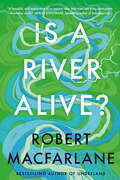
NEW YORK TIMES BESTSELLERFinalist for the Banff Mountain Book Competition in Environmental LiteratureLonglisted for the Andrew Carnegie Medal for Excellence…
in NonfictionA Hill Times Top 100 Best Book of 2025 From the celebrated writer, observer and naturalist Robert Macfarlane comes a brilliant, perspective-shifting new book, which answers a resounding "yes" to the question of its title.At the heart of Is a River Alive? is a single, transformative idea: that rivers are not mere matter for human use, but living beings, who should be recognized as such in both imagination and law. Macfarlane takes the reader on a mind-expanding global journey into the history, futures, people and places of the ancient, urgent concept.Around the world, rivers are dying from pollution, drought and damming. But a powerful movement is also underway to recognize the lives and the rights of rivers, and to re-animate our relationships with these vast, mysterious presences whose landscapes we share. The young "rights of nature" movement has lit up activists, artists, law-makers and politicians across six continents—and become the focus for revolutionary thinking about rivers in particular.The book flows like water, from the mountains to the sea, over three major journeys. The first is to northern Ecuador, where a miraculous cloud-forest and its rivers are threatened with destruction by Canadian gold-mining. The second is to the wounded rivers, creeks and lagoons of southern India, where a desperate battle to save the lives of these waterbodies is underway. The third is to northeastern Quebec, where a spectacular wild river—the Mutehekau or Magpie—is being defended from death by damming in a river-rights campaign led by an extraordinary Innu poet and leader called Rita Mestokosho.Is A River Alive? is at once a literary work of art, a rallying cry and a catalyst for change. It is a book that will open hearts, spark debates and challenge perspectives. A clarion call to re-centre rivers in our stories, law and politics, it invites us to radically re-imagine not only rivers but life itself. At the heart of this vital, beautiful book is the recognition that our fate flows with that of rivers—and always has.