Title search results
Showing 1 - 7 of 7 items
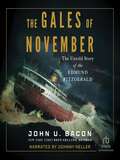
On the fiftieth anniversary of the Edmund Fitzgerald 's sinking, the bestselling author of The Great Halifax Explosion tells the…
definitive story of the "Mighty Fitz." For three decades following World War II, the Great Lakes overtook Europe as the epicenter of global economic strength. The region was the beating heart of the world economy, possessing all the power and prestige Silicon Valley does today. And no ship represented the apex of the American Century better than the 729-foot-long Edmund Fitzgerald —the biggest, best, and most profitable ship on the Lakes. But on November 10, 1975, as the "storm of the century" threw 100 mile-per-hour winds and 50-foot waves on Lake Superior, the Mighty Fitz found itself at the worst possible place, at the worst possible time. When she sank, she took all 29 men onboard down with her, leaving the tragedy shrouded in mystery for a half century. In The Gales of November , award-winning journalist John U. Bacon presents the definitive account of the disaster, drawing on more than 100 interviews with the families, friends, and former crewmates of those lost. Bacon explores the vital role Great Lakes shipping played in America's economic boom, the uncommon lives the sailors led, the sinking's most likely causes, and the heartbreaking aftermath for those left behind—"the wives, the sons, and the daughters," as Gordon Lightfoot sang in his unforgettable ballad. Focused on those directly affected by the tragedy, The Gales of November is both an emotional tribute to the lives lost and a propulsive, page-turning narrative history of America's most-mourned maritime disaster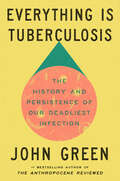
John Green, the #1 bestselling author of The Anthropocene Reviewed and a passionate advocate for global healthcare reform, tells a…
deeply human story illuminating the fight against the world’s deadliest infectious disease. “This highly readable call to action could not be more timely.” –Kirkus, starred review. “Memorably probes the intersections of medicine and human emotion.” –Bookpage, starred review. Tuberculosis has been entwined with humanity for millennia. Once romanticized as a malady of poets, today tuberculosis is seen as a disease of poverty that walks the trails of injustice and inequity we blazed for it. In 2019, author John Green met Henry Reider, a young tuberculosis patient at Lakka Government Hospital in Sierra Leone. John became fast friends with Henry, a boy with spindly legs and a big, goofy smile. In the years since that first visit to Lakka, Green has become a vocal advocate for increased access to treatment and wider awareness of the healthcare inequities that allow this curable, preventable infectious disease to also be the deadliest, killing over a million people every year. In Everything Is Tuberculosis, John tells Henry’s story, woven through with the scientific and social histories of how tuberculosis has shaped our world—and how our choices will shape the future of tuberculosis. New York Times Bestseller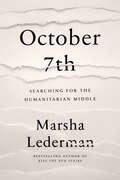
In this emotional missive from the diaspora, Globe and Mail columnist Marsha Lederman gathers her columns searching for the humanitarian…
middle of the Israel-Palestine conflict.Since 2023, the best-selling and award-winning author and journalist has been reflecting, with deep empathy, on the horrific October 7th attacks on Israeli citizens, rising anti-Semitism, and the brutal violence against civilians in Gaza in her column for the Globe and Mail.As one of the leading Canadian voices on Jewish identity, Lederman&’s impassioned work in the Globe has been a lifeline for readers since October 7th, 2023. The work collected in this book captures the pain of so many: Marsha&’s prose has a way of cutting through the noise and capturing the humanity behind the headlines. She makes room for the reader to be conflicted, grieving, angry and unsure, and is with them through that process as she, like all of us, grapples with a new reality.As someone who is firmly against Netanyahu and firmly in favour of Palestinian rights, believes in a two-state solution, and is a daughter of Holocaust survivors terrified by the rise in anti-Semitism, Marsha&’s writing has captured the full complexity of the experience of reconciling an abhorrence of the violence against Israelis and Palestinians with the trauma and fear of rising prejudice around the world.These columns are a contemporaneous look at the year that followed Oct 7th, 2023, reminding us of the pain and confusion. This collection is a crucial archive capturing, in real time, a period of deep division with care, empathy, and grief.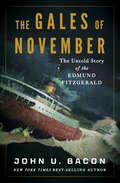
"A work of spectral beauty destined to be a classic. Readers of Sebastian Junger’s The Perfect Storm, Erik Larsen’s Dead…
Wake, and Nathaniel Philbrick’s In the Heart of the Sea will love this deeply reported tale." —Hampton Sides, New York Times best-selling author of The Wide Wide Sea and In the Kingdom of Ice "The Untold Story of the Edmund Fitzgerald’ has been told and retold by authors and bards. But never has it been told better than by Mr. Bacon in this colorful and compelling book.... Dead men tell no tales, but their loved ones do. Mr. Bacon tracked them down and listened." —John J. Miller, Wall Street Journal On the fiftieth anniversary of the Edmund Fitzgerald’s sinking, the bestselling author of The Great Halifax Explosion tells the definitive story of the "Mighty Fitz." For three decades following World War II, the Great Lakes overtook Europe as the epicenter of global economic strength. The region was the beating heart of the world economy, possessing all the power and prestige Silicon Valley does today. And no ship represented the apex of the American Century better than the 729-foot-long Edmund Fitzgerald—the biggest, best, and most profitable ship on the Lakes. But on November 10, 1975, as the "storm of the century" threw 100 mile-per-hour winds and 50-foot waves on Lake Superior, the Mighty Fitz found itself at the worst possible place, at the worst possible time. When she sank, she took all 29 men onboard down with her, leaving the tragedy shrouded in mystery for a half century. In The Gales of November, award-winning journalist John U. Bacon presents the definitive account of the disaster, drawing on more than 100 interviews with the families, friends, and former crewmates of those lost. Bacon explores the vital role Great Lakes shipping played in America’s economic boom, the uncommon lives the sailors led, the sinking’s most likely causes, and the heartbreaking aftermath for those left behind—"the wives, the sons, and the daughters," as Gordon Lightfoot sang in his unforgettable ballad. Focused on those directly affected by the tragedy, The Gales of November is both an emotional tribute to the lives lost and a propulsive, page-turning narrative history of America’s most-mourned maritime disaster.
A stunning narrative from one of the most powerful young writers at work today, and the director of the Oscar®-nominated…
documentary, Sugarcane, We Survived the Night interweaves oral history with hard-hitting journalism and a deeply personal father-son journey into a searing portrait of Indigenous survival, love, and resurgence.&“Julian Brave NoiseCat seamlessly connects true tales of identity and betrayal, love and abandonment, clarity and confusion. We Survived the Night is a whirling, radiant gift to the reader.&” —Louise Erdrich, author of The Night WatchmanJulian Brave NoiseCat&’s childhood was rich with culture and contradictions. When his Secwépemc and St&’at&’imc father, an artist haunted by a turbulent past, abandoned the family, NoiseCat and his non-Native mother were embraced by the urban Native community in Oakland, California, as well as by family on the Canim Lake Indian Reserve in British Columbia. In his father&’s absence, NoiseCat immersed himself in Native history and culture to understand the man he seldom saw—his past, his story, where he came from—and, by extension, himself.Years later, NoiseCat sets out across the continent to correct the erasure, invisibility, and misconceptions surrounding the First Peoples of this land as he develops his voice as a storyteller and artist. Told in the style of a "Coyote Story," a legend about the trickster forefather of NoiseCat&’s people who was revered for his wit and mocked for his tendency to self-destruct, We Survived the Night brings a traditional art form nearly annihilated by colonization back to life on the page. Through a dazzling blend of history and mythology, memoir and reportage, NoiseCat unravels old stories and braids together new ones. He grapples with the erasure of North America's First Peoples and the trauma that cascades across generations, while illuminating the vital Indigenous cultural, environmental, and political movements reshaping the future. He chronicles the historic ascent of the first Native American cabinet secretary in the United States and the first Indigenous sovereign of Canada; probes the colonial origins and limits of racial ideology and Indian identity through the story of the Lumbee Tribe of North Carolina; and hauls the golden eggs of an imperiled fish out of the sea alongside the Tlingit of Sitka, Alaska. This is a rewriting and a restoration—of Native history and, more intimately, of family and self, as NoiseCat seeks to reclaim a culture effaced by colonization and reconcile with a father who left. Virtuosic, compelling, and deeply moving, this is at once an intensely personal journey and a searing portrait of Indigenous survival, love, and resurgence.Drawing from five years of on-the-ground reporting, We Survived the Night paints a profound and unforgettable portrait of contemporary Indigenous life, alongside an intimate and deeply powerful reckoning between a father and a son. A soulful, formally daring, and indelible work from an important new voice.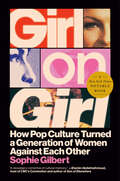
From Atlantic critic and Pulitzer Prize finalist Sophie Gilbert, a blazing critique of how early-aughts pop culture turned women and…
girls against each other—and themselves—with disastrous consequences. An urgent read that addresses questions around the current regression of feminism.When did feminism lose its way? This question feels increasingly urgent in a moment of reactionary cultural and legislative backlash, when widespread uncertainty about the movement&’s power, focus, and currency threatens decades of progress. Sophie Gilbert, a staff writer at The Atlantic and finalist for the Pulitzer Prize in criticism, provides one answer, identifying an inflection point in the late 1990s and early 2000s when the energy of third-wave and &“riot grrrl&” feminism collapsed into a regressive period of hyper-objectification, sexualization, and infantilization. Gilbert mines the darker side of nostalgia, training her keen analytic eye on the most revealing cultural objects of the era, across music, film, television, fashion, tabloid journalism, and more. What she recounts is harrowing, from the unattainable aesthetic of Victoria&’s Secret ads and explicit music videos to a burgeoning internet culture vicious towards women in the spotlight and damaging for those who weren&’t. Gilbert tracks many of the period&’s dominant themes back to the explosion of internet porn, tracing its widespread influence as it began to pervade our collective consciousness. Gilbert paints a devastating picture of an era when a distinctly American confluence of excess, materialism, and power-worship collided with the culture&’s reactionary, puritanical, and chauvinistic currents. Amidst a collective reconsideration of the way women are treated in public, Girl on Girl is a blistering indictment of the matrix of misogyny that undergirded the cultural production of the early twenty-first century, and how it continues to shape our world today.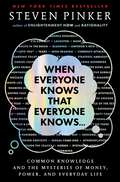
From one of the world&’s most celebrated intellectuals, a &“fascinating&” (Financial Times), brilliantly insightful work that explains how we think…
about each other&’s thoughts about each other&’s thoughts, ad infinitum. It sounds impossible, but &“superlatively gifted science writer&” (The Times) Steven Pinker shows that we do it all the time. This awareness, which we experience as something that is public or &“out there,&” is called common knowledge, and it has a momentous impact on our social, political, and economic lives.Common knowledge is necessary for coordination, for making arbitrary but complementary choices like driving on the right, using paper currency, and coalescing behind a political leader or movement. It&’s also necessary for social coordination: everything from rendezvousing at a time and place to speaking the same language to forming enduring relationships of friendship, romance, or authority. Humans have a sixth sense for common knowledge, and we create it with signals like laughter, tears, blushing, eye contact, and blunt speech. But people also go to great lengths to avoid common knowledge—to ensure that even if everyone knows something, they can&’t know that everyone else knows they know it. And so we get rituals like benign hypocrisy, veiled bribes and threats, sexual innuendo, and pretending not to see the elephant in the room. Pinker shows how the hidden logic of common knowledge can make sense of many of life&’s enigmas: financial bubbles and crashes, revolutions that come out of nowhere, the posturing and pretense of diplomacy, the eruption of social media shaming mobs and academic cancel culture, the awkwardness of a first date. Artists and humorists have long mined the intrigues of common knowledge, and Pinker liberally uses their novels, jokes, cartoons, films, and sitcom dialogues to illuminate social life&’s tragedies and comedies. Along the way he answers questions like: -Why do people hoard toilet paper at the first sign of an emergency? -Why are Super Bowl ads dominated by crypto? -Why, in American presidential primary voting, do citizens typically select the candidate they believe is preferred by others rather than their favorite? -Why did Russian authorities arrest a protester who carried a blank sign? -Why is it so hard for nervous lovers to say goodbye at the end of a phone call? -Why does everyone agree that if we were completely honest all the time, life would be unbearable? Consistently riveting in explaining the paradoxes of human behavior, and &“one of the most insightful books…about what makes us human&” (Bill Gates), When Everyone Knows That Everyone Knows… invites us to understand the ways we try to get into each other&’s heads and the harmonies, hypocrisies, and outrages that result.