Title search results
Showing 1 - 5 of 5 items
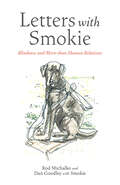
Letters with Smokie captures an epistolic exchange between Dan Goodley and Rod Michalko, or rather, Rod Michalko's late guide dog,…
Smokie. A lively exploration of human-animal relationships and disability as disruption, disturbance, and art, the book offers a refreshing re-evaluation of cultural misunderstandings of disability.
In September 2020, Rod Michalko wrote to friend and colleague Dan Goodley, congratulating him on the release of his latest…
book, Disability and Other Human Questions . Joking that his late guide dog, Smokie, had taken offense to the suggestion that disability was purely a human question, Michalko shared a few thoughts on behalf of his dog. When Goodley wrote back—to Smokie—so began an epistolic exchange that would continue for the next seven months. As the COVID-19 pandemic swept across the world and the realities of lockdown-imposed isolation set in, the Smokie letters provided the friends a space in which to come together in a lively exploration of human-animal relationships and to interrogate disability as disruption, disturbance, and art. Just as he did in life, Smokie guides. In these pages, he offers wisdom about the world, love, friendship, and even The Beatles. His canine observations of human experience provide an avenue into some of the ways blindness might be reconceptualized and "befriended." Uninhibited by the trappings of traditional academic inquiry, Michalko and Goodley are unleashed, free to wander, to wonder, and to provoke within the bonds of trust and respect. Funny and thoughtful, the result is a refreshing exploration and re-evaluation of learned cultural misunderstandings of disability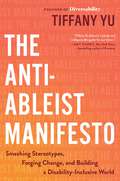
Tiffany Yu takes readers on a revelatory examination of disability—how to unpack biases and build an inclusive and accessible world.…
As the Asian American daughter of immigrants, living with PTSD, and sustaining a permanent arm injury at age nine, Tiffany Yu is well aware of the intersections of identity that affect us all. She navigated the male-dominated world of corporate finance as an investment banker at Goldman Sachs before founding Diversability, an award-winning community business run by disabled people building disability pride, power, and leadership, and creating the viral Anti-Ableism series on TikTok. Organized from personal to professional, domestic to political, Me to We to Us, The Anti-Ableist Manifesto frames context for conversations, breaks down the language of ableism, identifies microaggressions, and offers actions that lead to authentic allyship. • How do we remove ableist language from our daily vocabulary? • How do we create inclusive events? • What are the advantages of hiring disabled employees, and what market opportunities are we missing out on when we don&’t consider disabled consumers? With contributions from disability advocates, activists, authors, entrepreneurs, scholars, educators, and executives, Yu celebrates the power of stories and lived experiences to foster the proximity, intimacy, and humanity of disability identities that have far too often been &“othered&” and rendered invisible.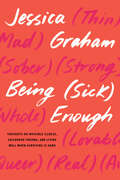
Wise, visceral essays on navigating pain, sex, trauma, spirituality, addiction, recovery, and grief from queer, neurodivergent trauma-resolution guide Jessica GrahamIn…
an unapologetic look at living well with trauma and chronic illness, writer and meditation teacher Jessica Graham offers smart, funny, raw, and mindful insights on untangling—and embracing—the messy realities of being a human alive on this planet today.Graham gives us permission to accept care—and accept that it&’s okay to want care. They weave together personal stories and practical wisdom, offering their take on managing symptoms, getting creative, setting boundaries, and healing from ableist tropes like &“you don&’t look sick&” and &“we&’re all a little ADHD.&”Graham also shares vulnerable personal history: The adverse childhood experiences that wired their body and brain. The workaholism and addictions that kept their pain lying just below the surface. How illness and trauma intersect to obscure the knowledge that we&’re each enough, wholly as we are.This memoir explores the parts of chronic illness life that don&’t get enough airtime: How can we center sex and pleasure when pain gets in the way? How can we live well while living through late-stage capitalist hell? How can we come into relationship with our pain without falling prey to self-blame, magical thinking, or toxic positivity?Wise and embodied, fearless and necessary, Being (Sick) Enough is both a wild awakening and a love letter to your whole self: the pains and suffering, joys and brightness, and vital connections that hold each of us as we navigate what it means to be here, like this, right now.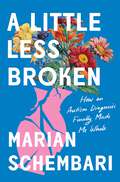
“An inspiring memoir about coming home to who you are.” —People MagazineOne woman’s decades-long journey to a diagnosis of autism,…
and the barriers that keep too many neurodivergent people from knowing their true selvesMarian Schembari was thirty-four years old when she learned she was autistic. By then, she’d spent decades hiding her tics and shutting down in public, wondering why she couldn’t just act like everyone else. Therapists told her she had Tourette’s syndrome, obsessive-compulsive disorder, sensory processing disorder, social anxiety, and recurrent depression. They prescribed breathing techniques and gratitude journaling. Nothing helped.It wasn’t until years later that she finally learned the truth: she wasn’t weird or deficient or moody or sensitive or broken. She was autistic.Today, more people than ever are diagnosed with autism spectrum disorder. Testing improvements have made it easier to identify neurodivergence, especially among women and girls who spent decades dismissed by everyone from parents to doctors, and misled by gender-biased research. A diagnosis can end the cycle of shame and invisibility, but only if it can be found.In this deeply personal and researched memoir, Schembari’s journey takes her from the mountains of New Zealand to the tech offices of San Francisco, from her first love to her first child, all with unflinching honesty and good humor.A Little Less Broken breaks down the barriers that leave women in the dark about their own bodies, and reveals what it truly means to embrace our differences.