Title search results
Showing 1 - 13 of 13 items
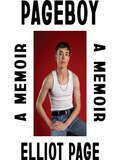
The Oscar-nominated star who captivated the world with his performance in Juno finally shares his truth. "Can I kiss you?"…
It was two months before the world premiere of Juno, and Elliot Page was in his first ever queer bar. The hot summer air hung heavy around him as he looked at her. And then it happened. In front of everyone. A previously unfathomable experience. Here he was on the precipice of discovering himself as a queer person, as a trans person. Getting closer to his desires, his dreams, himself, without the repression he'd carried for so long. But for Elliot, two steps forward had always come with one step back. With Juno's massive success, Elliot became one of the world's most beloved actors. His dreams were coming true, but the pressure to perform suffocated him. He was forced to play the part of the glossy young starlet, a role that made his skin crawl, on and off set. The career that had been an escape out of his reality and into a world of imagination was suddenly a nightmare. As he navigated criticism and abuse from some of the most powerful people in Hollywood, a past that snapped at his heels, and a society dead set on forcing him into a binary, Elliot often stayed silent, unsure of what to do, until enough was enough. Full of behind the scenes details and intimate interrogations on sex, love, trauma, and Hollywood, Pageboy is the story of a life pushed to the brink. But at its core, this beautifully written, winding journey of what it means to untangle ourselves from the expectations of others is an ode to stepping into who we truly are with defiance, strength, and joy.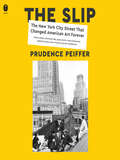
Longlisted for the National Book Award The never-before-told story of an obscure little street at the lower tip of Manhattan…
and the remarkable artists who got their start there. For just over a decade, from 1956 to 1967, a collection of dilapidated former sail-making warehouses clustered at the lower tip of Manhattan became the quiet epicenter of the art world. Coenties Slip, a dead-end street near the water, was home to a circle of wildly talented and varied artists that included Robert Indiana, Ellsworth Kelly, Agnes Martin, James Rosenquist, Delphine Seyrig, Lenore Tawney, and Jack Youngerman. As friends and inspirations to one another, they created a unique community for unbridled creative expression and experimentation, and the works they made at the Slip would go on to change the course of American art. Now, for the first time, Prudence Peiffer pays homage to these artists and the unsung impact their work had on the direction of late twentieth-century art and film. This remarkable biography, as transformative as the artists it illuminates, questions the very concept of a "group" or "movement," as it spotlights the Slip's eclectic mix of gender and sexual orientation, abstraction and Pop, experimental film, painting, and sculpture, assemblage and textile works. Brought together not by the tenets of composition or technique, nor by philosophy or politics, the artists cultivated a scene at the Slip defined by a singular spirit of community and place. They drew lasting inspiration from one another, but perhaps even more from where they called home, and the need to preserve the solitude its geography fostered. Despite Coenties Slip's obscurity, the entire history of Manhattan was inscribed into its cobblestones—one of the first streets and central markets of the new colony, built by enslaved people, with revolutionary meetings at the tavern just down Pearl Street; named by Herman Melville in Moby Dick and site of the boom and bust of the city's maritime industry; and, in the artists's own time, a development battleground for Jane Jacobs and Robert Moses. The Slip's history is entwined with that of the artists and their art—eclectic and varied work that was made from the wreckage of the city's many former lives. An ambitious and singular account of a time, a place, and a group of extraordinary people, The Slip investigates the importance of community, and makes an argument for how we are shaped by it, and how it in turns shapes our work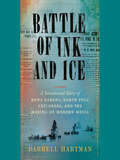
"Absolutely gripping… a perfectly splendid read—I highly, highly recommend it" — Douglas Preston, author of the #1 New York Times…
bestseller The Lost City of the Monkey God A sixty-year saga of frostbite and fake news that follows the no-holds-barred battle between two legendary explorers to reach the North Pole, and the newspapers which stopped at nothing to get–and sell–the story. In the fall of 1909, a pair of bitter contests captured the world’s attention. The American explorers Robert Peary and Frederick Cook both claimed to have discovered the North Pole, sparking a vicious feud that was unprecedented in international scientific and geographic circles. At the same time, the rivalry between two powerful New York City newspapers—the storied Herald and the ascendant Times —fanned the flames of the so-called polar controversy, as each paper financially and reputationally committed itself to an opposing explorer and fought desperately to defend him. The Herald was owned and edited by James Gordon Bennett, Jr., an eccentric playboy whose nose for news was matched only by his appetite for debauchery and champagne. The Times was published by Adolph Ochs, son of Jewish immigrants, who’d improbably rescued the paper from extinction and turned it into an emerging powerhouse. The battle between Cook and Peary would have enormous consequences for both newspapers, and help to determine the future of corporate media. BATTLE OF INK AND ICE presents a frank portrayal of Arctic explorers, brave men who both inspired and deceived the public. It also sketches a vivid portrait of the newspapers that funded, promoted, narrated, and often distorted their exploits. It recounts a sixty-year saga of frostbite and fake news, one that culminates with an unjustly overlooked chapter in the origin story of the modern New York Times. By turns tragic and absurd, BATTLE OF INK AND ICE brims with contemporary relevance, touching as it does on themes of class, celebrity, the ever-quickening news cycle, and the benefits and pitfalls of an increasingly interconnected world. Above all, perhaps, its cast of characters testifies—colorfully and compellingly—to the ongoing role of personality and publicity in American cultural life as the Gilded Age gave way to the twentieth century—the American century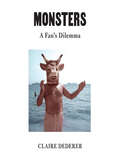
NATIONAL BESTSELLER • A NEW YORK TIMES MOST ANTICIPATED BOOK • A timely, passionate, provocative, blisteringly smart interrogation of how…
we make and experience art in the age of cancel culture, and of the link between genius and monstrosity. Can we love the work of controversial classic and contemporary artists but dislike the artist? "A lively, personal exploration of how one might think about the art of those who do bad things" — Vanity Fair " Monsters leaves us with Dederer’s passionate commitment to the artists whose work most matters to her, and a framework to address these questions about the artists who matter most to us." — The Washington Post "[Dederer] breaks new ground, making a complex cultural conversation feel brand new." —Ada Calhoun, author of Also a Poet From the author of the New York Times best seller Poser and the acclaimed memoir Love and Trouble, Monsters is "part memoir, part treatise, and all treat" ( The New York Times ). This unflinching, deeply personal book expands on Claire Dederer’s instantly viral Paris Review essay, "What Do We Do with the Art of Monstrous Men?" Can we love the work of artists such as Hemingway, Sylvia Plath, Miles Davis, Polanski, or Picasso? Should we? Dederer explores the audience's relationship with artists from Michael Jackson to Virginia Woolf, asking: How do we balance our undeniable sense of moral outrage with our equally undeniable love of the work? Is male monstrosity the same as female monstrosity? And if an artist is also a mother, does one identity inexorably, and fatally, interrupt the other? In a more troubling vein, she wonders if an artist needs to be a monster in order to create something great. Does genius deserve special dispensation? Does art have a mandate to depict the darker elements of the psyche? And what happens if the artist stares too long into the abyss? Highly topical, morally wise, honest to the core, Monsters is certain to incite a conversation about whether and how we can separate artists from their art
From the Pulitzer Prize–winning journalist who broke the story, the inspiring account of the sixteen female scientists who forced MIT…
to publicly admit it had been discriminating against its female faculty for years—sparking a nationwide reckoning with the pervasive sexism in science. "Excellent and infuriating." — The New York Times In 1999, the Massachusetts Institute of Technology admitted to discriminating against women on its faculty, forcing institutions across the country to confront a problem they had long ignored: the need for more women at the top levels of science. Written by the journalist who broke the story for The Boston Globe , The Exceptions is the untold story of how sixteen highly accomplished women on the MIT faculty came together to do the work that triggered the historic admission. The Exceptions centers on the life of Nancy Hopkins, a reluctant feminist who became the leader of the sixteen and a hero to two generations of women in science. Hired to prestigious universities at the dawn of affirmative action efforts in the 1970s, Dr. Hopkins and her peers embarked on their careers believing that discrimination against women was a thing of the past—that science was, at last, a pure meritocracy. For years they explained away the discrimination they experienced as the exception, not the rule. Only when these few women came together after decades of underpayment and the denial of credit, advancement, and equal resources to do their work did they recognize the relentless pattern: women were often marginalized and minimized, especially as they grew older. Meanwhile, men of similar or lesser ability had their career paths paved and widened. The Exceptions is a powerful yet all-too-familiar story that will resonate with all professional women who experience what those at MIT called "21st-century discrimination"—a subtle and stubborn bias, often unconscious but still damaging. As in bestsellers from Hidden Figures to Lab Girl and Code Girls , we are offered a rare glimpse into the world of high-level scientific research and learn about the extraordinary female scientists whose work has been overlooked throughout history, and how these women courageously fought for fair treatment as they struggled to achieve the recognition they rightfully deserve
From the #1 New York Times bestselling author of Killers of the Flower Moon , a page-turning story of shipwreck,…
survival, and savagery, culminating in a court martial that reveals a shocking truth. The powerful narrative reveals the deeper meaning of the events on The Wager , showing that it was not only the captain and crew who ended up on trial, but the very idea of empire. "A tour de force of narrative nonfiction." — The Wall Street Journal On January 28, 1742, a ramshackle vessel of patched-together wood and cloth washed up on the coast of Brazil. Inside were thirty emaciated men, barely alive, and they had an extraordinary tale to tell. They were survivors of His Majesty’s Ship the Wager, a British vessel that had left England in 1740 on a secret mission during an imperial war with Spain. While the Wager had been chasing a Spanish treasure-filled galleon known as "the prize of all the oceans," it had wrecked on a desolate island off the coast of Patagonia. The men, after being marooned for months and facing starvation, built the flimsy craft and sailed for more than a hundred days, traversing nearly 3,000 miles of storm-wracked seas. They were greeted as heroes. But then ... six months later, another, even more decrepit craft landed on the coast of Chile. This boat contained just three castaways, and they told a very different story. The thirty sailors who landed in Brazil were not heroes – they were mutineers. The first group responded with countercharges of their own, of a tyrannical and murderous senior officer and his henchmen. It became clear that while stranded on the island the crew had fallen into anarchy, with warring factions fighting for dominion over the barren wilderness. As accusations of treachery and murder flew, the Admiralty convened a court martial to determine who was telling the truth. The stakes were life-and-death—for whomever the court found guilty could hang. The Wager is a grand tale of human behavior at the extremes told by one of our greatest nonfiction writers. Grann’s recreation of the hidden world on a British warship rivals the work of Patrick O’Brian, his portrayal of the castaways’ desperate straits stands up to the classics of survival writing such as The Endurance , and his account of the court martial has the savvy of a Scott Turow thriller. As always with Grann’s work, the incredible twists of the narrative hold the reader spellbound
This program includes an author's note read by the author. An unflinching investigation reveals the human rights abuses behind the…
Congo's cobalt mining operation—and the moral implications that affect us all. Cobalt Red is the searing, first-ever exposé of the immense toll taken on the people and environment of the Democratic Republic of the Congo by cobalt mining, as told through the testimonies of the Congolese people themselves. Activist and researcher Siddharth Kara has traveled deep into cobalt territory to document the testimonies of the people living, working, and dying for cobalt. To uncover the truth about brutal mining practices, Kara investigated militia-controlled mining areas, traced the supply chain of child-mined cobalt from toxic pit to consumer-facing tech giants, and gathered shocking testimonies of people who endure immense suffering and even die mining cobalt. Cobalt is an essential component to every lithium-ion rechargeable battery made today, the batteries that power our smartphones, tablets, laptops, and electric vehicles. Roughly 75 percent of the world's supply of cobalt is mined in the Congo, often by peasants and children in sub-human conditions. Billions of people in the world cannot conduct their daily lives without participating in a human rights and environmental catastrophe in the Congo. In this stark and crucial audiobook, Kara argues that we must all care about what is happening in the Congo—because we are all implicated. A Macmillan Audio production from St. Martin's Press
The instant New York Times bestseller • A New York Times Notable Book • Named a Best Book of the Year…
by The Economist • Nominated for the Financial Times and Schroders Business Book of the Year Award"Addicted to Succession? Well, here's the real thing." - The Hollywood Reporter&“Jaw-dropping . . . an epic tale of toxic wealth and greed populated by connivers and manipulators.&” —The New York Times Book Review, Editors&’ ChoiceThe shocking inside story of the struggle for power and control at Paramount Global, the multibillion-dollar entertainment empire controlled by the Redstone family, and the dysfunction, misconduct, and deceit that threatened the future of the company, from the Pulitzer Prize–winning journalists who first broke the newsIn 2016, the fate of Paramount Global&’s entertainment empire hung precariously in the balance. Its founder and head, ninety-three-year-old Sumner M. Redstone, was facing a very public lawsuit brought by a former romantic companion, Manuela Herzer, which placed Sumner&’s deteriorating health and questionable judgment under a harsh light.As an all-powerful media mogul, Sumner had been a demanding boss, and an even more demanding father. When his daughter, Shari, took control of the business, she faced the hostility of boards who for years had heard Sumner disparage her. Les Moonves, the CEO of CBS, schemed with his allies on the board to strip Shari of power. But while he publicly battled Shari, news began to leak of Moonves&’s involvement in multiple instances of sexual misconduct, and he began working behind the scenes to try to make the stories disappear.Unscripted is an explosive and unvarnished look at the usually secret inner workings of two public companies, their boards of directors, and a wealthy, dysfunctional family in the throes of seismic changes. From the Pulitzer Prize– winning journalists James B. Stewart and Rachel Abrams, Unscripted lays bare the battle for power at any price—and the carnage that ensued.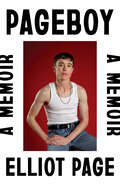
The Oscar-nominated star who captivated the world with his performance in Juno finally shares his truth.“Can I kiss you?” It…
was two months before the world premiere of Juno, and Elliot Page was in his first ever queer bar. The hot summer air hung heavy around him as he looked at her. And then it happened. In front of everyone. A previously unfathomable experience. Here he was on the precipice of discovering himself as a queer person, as a trans person. Getting closer to his desires, his dreams, himself, without the repression he’d carried for so long. But for Elliot, two steps forward had always come with one step back. With Juno’s massive success, Elliot became one of the world’s most beloved actors. His dreams were coming true, but the pressure to perform suffocated him. He was forced to play the part of the glossy young starlet, a role that made his skin crawl, on and off set. The career that had been an escape out of his reality and into a world of imagination was suddenly a nightmare. As he navigated criticism and abuse from some of the most powerful people in Hollywood, a past that snapped at his heels, and a society dead set on forcing him into a binary, Elliot often stayed silent, unsure of what to do, until enough was enough. Full of behind the scenes details and intimate interrogations on sex, love, trauma, and Hollywood, Pageboy is the story of a life pushed to the brink. But at its core, this beautifully written, winding journey of what it means to untangle ourselves from the expectations of others is an ode to stepping into who we truly are with defiance, strength, and joy.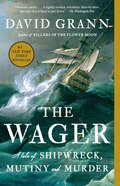
#1 NEW YORK TIMES BESTSELLER • From the author of Killers of the Flower Moon, a page-turning story of shipwreck,…
survival, and savagery, culminating in a court martial that reveals a shocking truth. The powerful narrative reveals the deeper meaning of the events on The Wager, showing that it was not only the captain and crew who ended up on trial, but the very idea of empire.A Best Book of the Year: The New York Times, The Wall Street Journal, The New Yorker, TIME, Smithsonian, NPR, Vulture, Kirkus Reviews&“Riveting...Reads like a thriller, tackling a multilayered history—and imperialism—with gusto.&” —Time "A tour de force of narrative nonfiction.&” —The Wall Street JournalOn January 28, 1742, a ramshackle vessel of patched-together wood and cloth washed up on the coast of Brazil. Inside were thirty emaciated men, barely alive, and they had an extraordinary tale to tell. They were survivors of His Majesty&’s Ship the Wager, a British vessel that had left England in 1740 on a secret mission during an imperial war with Spain. While the Wager had been chasing a Spanish treasure-filled galleon known as &“the prize of all the oceans,&” it had wrecked on a desolate island off the coast of Patagonia. The men, after being marooned for months and facing starvation, built the flimsy craft and sailed for more than a hundred days, traversing nearly 3,000 miles of storm-wracked seas. They were greeted as heroes.But then ... six months later, another, even more decrepit craft landed on the coast of Chile. This boat contained just three castaways, and they told a very different story. The thirty sailors who landed in Brazil were not heroes – they were mutineers. The first group responded with countercharges of their own, of a tyrannical and murderous senior officer and his henchmen. It became clear that while stranded on the island the crew had fallen into anarchy, with warring factions fighting for dominion over the barren wilderness. As accusations of treachery and murder flew, the Admiralty convened a court martial to determine who was telling the truth. The stakes were life-and-death—for whomever the court found guilty could hang.The Wager is a grand tale of human behavior at the extremes told by one of our greatest nonfiction writers. Grann&’s recreation of the hidden world on a British warship rivals the work of Patrick O&’Brian, his portrayal of the castaways&’ desperate straits stands up to the classics of survival writing such as The Endurance, and his account of the court martial has the savvy of a Scott Turow thriller. As always with Grann&’s work, the incredible twists of the narrative hold the reader spellbound.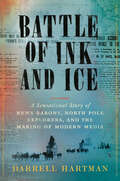
"Absolutely gripping… a perfectly splendid read—I highly, highly recommend it&” -- Douglas Preston, author of the #1 New York Times…
bestseller The Lost City of the Monkey GodA sixty-year saga of frostbite and fake news that follows the no-holds-barred battle between two legendary explorers to reach the North Pole, and the newspapers which stopped at nothing to get–and sell–the story.In the fall of 1909, a pair of bitter contests captured the world&’s attention. The American explorers Robert Peary and Frederick Cook both claimed to have discovered the North Pole, sparking a vicious feud that was unprecedented in international scientific and geographic circles. At the same time, the rivalry between two powerful New York City newspapers—the storied Herald and the ascendant Times—fanned the flames of the so-called polar controversy, as each paper financially and reputationally committed itself to an opposing explorer and fought desperately to defend him.The Herald was owned and edited by James Gordon Bennett, Jr., an eccentric playboy whose nose for news was matched only by his appetite for debauchery and champagne. The Times was published by Adolph Ochs, son of Jewish immigrants, who&’d improbably rescued the paper from extinction and turned it into an emerging powerhouse. The battle between Cook and Peary would have enormous consequences for both newspapers, and help to determine the future of corporate media. BATTLE OF INK AND ICE presents a frank portrayal of Arctic explorers, brave men who both inspired and deceived the public. It also sketches a vivid portrait of the newspapers that funded, promoted, narrated, and often distorted their exploits. It recounts a sixty-year saga of frostbite and fake news, one that culminates with an unjustly overlooked chapter in the origin story of the modern New York Times.By turns tragic and absurd, BATTLE OF INK AND ICE brims with contemporary relevance, touching as it does on themes of class, celebrity, the ever-quickening news cycle, and the benefits and pitfalls of an increasingly interconnected world. Above all, perhaps, its cast of characters testifies—colorfully and compellingly—to the ongoing role of personality and publicity in American cultural life as the Gilded Age gave way to the twentieth century—the American century.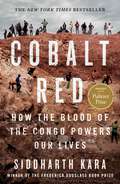
The revelatory Pulitzer Prize finalist for General Nonfiction, New York Times and Publishers Weekly bestseller, shortlisted for the Financial Times…
Best Business Book of the Year Award.An unflinching investigation reveals the human rights abuses behind the Congo’s cobalt mining operation—and the moral implications that affect us all.Cobalt Red is the searing, first-ever exposé of the immense toll taken on the people and environment of the Democratic Republic of the Congo by cobalt mining, as told through the testimonies of the Congolese people themselves. Activist and researcher Siddharth Kara has traveled deep into cobalt territory to document the testimonies of the people living, working, and dying for cobalt. To uncover the truth about brutal mining practices, Kara investigated militia-controlled mining areas, traced the supply chain of child-mined cobalt from toxic pit to consumer-facing tech giants, and gathered shocking testimonies of people who endure immense suffering and even die mining cobalt.Cobalt is an essential component to every lithium-ion rechargeable battery made today, the batteries that power our smartphones, tablets, laptops, and electric vehicles. Roughly 75 percent of the world’s supply of cobalt is mined in the Congo, often by peasants and children in sub-human conditions. Billions of people in the world cannot conduct their daily lives without participating in a human rights and environmental catastrophe in the Congo. In this stark and crucial book, Kara argues that we must all care about what is happening in the Congo—because we are all implicated.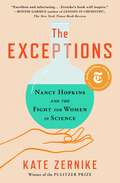
A New York Times Notable Book As late as 1999, women who succeeded in science were called &“exceptional&” as if…
it were unusual for them to be so bright. They were exceptional, not because they could succeed at science but because of all they accomplished despite the hurdles. &“Gripping…one puts down the book inspired by the women&’s grit, tenacity, and brilliance.&” —Science &“Riveting.&” —Siddhartha Mukherjee, author of The GeneIn 1963, a female student was attending a lecture given by Nobel Prize winner James Watson, then tenured at Harvard. At nineteen, she was struggling to define her future. She had given herself just ten years to fulfill her professional ambitions before starting the family she was expected to have. For women at that time, a future on the usual path of academic science was unimaginable—but during that lecture, young Nancy Hopkins fell in love with the promise of genetics. Confidently believing science to be a pure meritocracy, she embarked on a career. In 1999, Hopkins, now a noted molecular geneticist and cancer researcher at MIT, divorced and childless, found herself underpaid and denied the credit and resources given to men of lesser rank. Galvanized by the flagrant favoritism, Hopkins led a group of sixteen women on the faculty in a campaign that prompted MIT to make the historic admission that it had long discriminated against its female scientists. The sixteen women were a formidable group: their work has advanced our understanding of everything from cancer to geology, from fossil fuels to the inner workings of the human brain. And their work to highlight what they called &“21st-century discrimination&”—a subtle, stubborn, often unconscious bias—set off a national reckoning with the pervasive sexism in science. From the Pulitzer Prize–winning journalist who broke the story, The Exceptions chronicles groundbreaking science and a history-making fight for equal opportunity. It is the &“excellent and infuriating&” (The New York Times) story of how this group of determined, brilliant women used the power of the collective and the tools of science to inspire ongoing radical change. And it offers an intimate look at the passion that drives discovery, and a rare glimpse into the competitive, hierarchical world of elite science—and the women who dared to challenge it.