Title search results
Showing 1 - 2 of 2 items

Braille (Contracted), Electronic braille (Contracted), DAISY Audio (Direct to Player), DAISY Audio (Zip), DAISY text (Direct to player), DAISY text (Zip), Word (Zip), ePub (Zip)
Disabilities, General non-fiction, LGBTQ+ biography
Synthetic audio, Human-transcribed braille
In The Future Is Disabled, Leah Laksmi Piepzna-Samarasinha asks some provocative questions: What if, in the near future, the majority…
of people will be disabled - and what if that's not a bad thing? And what if disability justice and disabled wisdom are crucial to creating a future in which it's possible to survive fascism, climate change, and pandemics and to bring about liberation? Building on the work of their game-changing book Care Work: Dreaming Disability Justice, Piepzna-Samarasinha writes about disability justice at the end of the world, documenting the many ways disabled people kept and are keeping each other - and the rest of the world - alive during Trump, fascism and the COVID-19 pandemic. Other subjects include crip interdependence, care and mutual aid in real life, disabled community building, and disabled art practice as survival and joy. Written over the course of two years of disabled isolation during the pandemic, this is a book of love letters to other disabled QTBIPOC (and those concerned about disability justice, the care crisis, and surviving the apocalypse); honour songs for kin who are gone; recipes for survival; questions and real talk about care, organizing, disabled families, and kin networks and communities; and wild brown disabled femme joy in the face of death. With passion and power, The Future Is Disabled remembers our dead and insists on our future.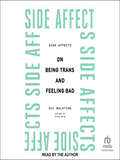
DAISY audio (Direct to player), DAISY audio (Zip)
General non-fiction, LGBTQ+ biography
Human-narrated audio
Some days-or weeks, or months, or even years-being trans feels bad. Yet as Hil Malatino points out, there is little…
space for trans people to think through, let alone speak of, these bad feelings. Negative emotions are suspect because they unsettle narratives of acceptance or reinforce virulently phobic framings of trans as inauthentic and threatening. In Side Affects, Malatino opens a new conversation about trans experience that acknowledges the reality of feeling fatigue, envy, burnout, numbness, and rage amid the ongoing onslaught of casual and structural transphobia in order to map the intricate emotional terrain of trans survival. Trans structures of feeling are frequently coded as negative on both sides of transition. Before transition, narratives are framed in terms of childhood trauma and being in the "wrong body." Post transition, trans individuals-especially trans people of color-are subject to unrelenting transantagonism. By moving these unloved feelings to the center of trans experience, Side Affects proposes an affective trans commons that exists outside political debates about inclusion. Acknowledging such powerful and elided feelings as anger and exhaustion, Malatino contends, is critical to motivating justice-oriented advocacy and organizing-and recalibrating new possibilities for survival and well-being