Title search results
Showing 1 - 6 of 6 items

A masterful telling of the way World War Two has been remembered, forgotten, and remade by Canada over seventy-five years.…
The Second World War shaped modern Canada. It led to the country's emergence as a middle power on the world stage; the rise of the welfare state; industrialization, urbanization, and population growth. After the war, Canada increasingly turned toward the United States in matters of trade, security, and popular culture, which then sparked a desire to strengthen Canadian nationalism from the threat of American hegemony. The Fight for History examines how Canadians framed and reframed the war experience over time. Just as the importance of the battle of Vimy Ridge to Canadians rose, fell, and rose again over a 100-year period, the meaning of Canada's Second World War followed a similar pattern. But the Second World War's relevance to Canada led to conflict between veterans and others in society—more so than in the previous war—as well as a more rapid diminishment of its significance. By the end of the 20th century, Canada's experiences in the war were largely framed as a series of disasters. Canadians seemed to want to talk only of the defeats at Hong Kong and Dieppe or the racially driven policy of the forced relocation of Japanese-Canadians. In the history books and media, there was little discussion of Canada's crucial role in the Battle of the Atlantic, the success of its armies in Italy and other parts of Europe, or the massive contribution of war materials made on the home front. No other victorious nation underwent this bizarre reframing of the war, remaking victories into defeats. The Fight for History is about the efforts to restore a more balanced portrait of Canada's contribution in the global conflict. This is the story of how Canada has talked about the war in the past, how we tried to bury it, and how it was restored. This is the history of a constellation of changing ideas, with many historical twists and turns, and a series of fascinating actors and events
This book shows in impressive detail how soldiers, airmen, and sailors fought - the evolving tactics, weapons of war, logistics,…
and technology. It gauges Canadian effectiveness against the skilled enemy whom they confronted in battlefields from 1939 to 1943, from the sweltering heat of Sicily to the frigid North Atlantic, and from the urban warfare of Ortona to the dark skies over Germany. "The Necessary War" examines the equally important factors of morale, discipline, and fortitude of the Canadian citizen-soldiers. 2014.
From our country's most important war historian, a gripping account of the turbulent relationship between Canada and the US during…
the Second World War. The two nations entered the war amidst rivalry and mutual suspicion, but learned to fight together before emerging triumphant and bound by an alliance that has lasted to this day.When the Second World War broke out in 1939, it set in motion a deadly struggle between the Axis powers and the Allies, but also fraught negotiations between and among the Allies. On questions of diplomacy, economic policy, industrial might, military capabilities, and even national sovereignty, thousands of lives and the fate of the free world depended on back-room deals and desperate trade-offs between soldiers, diplomats, and leaders.In North America, Canada and the US strained to forge a new military alliance to guard their coasts and fend off German U-boats and the menace of a Japanese invasion. Wartime economies were entwined to produce a staggering contribution of weapons to keep Britain and other allies in the war. The defense of North America against enemy threats was essential before the US and Canada could send armies, navies, and air forces overseas.In his trademark style, Tim Cook employs eyewitness accounts to vividly lay bare the brutality of combat and the courage of North Americans under fire. Behind the fighting fronts, the charged and often secret communications between national leaders Churchill, Roosevelt, and King reveals how their personalities shaped the outcome of history’s most destructive war, the fate of the British Empire, and the North American alliance that lives on to this day.The Good Allies is a masterful account of how Canadians and Americans made the transition from wary rivals to steadfast allies, and how Canada thrived in the shadow of the military and global superpower. In exploring this complex and crucial dimension of the Second World War and its legacy, Cook recounts two nations’ story of cooperation, of sacrifice, and of bleeding together to save the world from the fascist threat.
A masterful telling of the way World War Two has been remembered, forgotten, and remade by Canada over seventy-five years.…
The Second World War shaped modern Canada. It led to the country's emergence as a middle power on the world stage; the rise of the welfare state; industrialization, urbanization, and population growth. After the war, Canada increasingly turned toward the United States in matters of trade, security, and popular culture, which then sparked a desire to strengthen Canadian nationalism from the threat of American hegemony. The Fight for History examines how Canadians framed and reframed the war experience over time. Just as the importance of the battle of Vimy Ridge to Canadians rose, fell, and rose again over a 100-year period, the meaning of Canada's Second World War followed a similar pattern. But the Second World War's relevance to Canada led to conflict between veterans and others in society--more so than in the previous war--as well as a more rapid diminishment of its significance. By the end of the 20th century, Canada's experiences in the war were largely framed as a series of disasters. Canadians seemed to want to talk only of the defeats at Hong Kong and Dieppe or the racially driven policy of the forced relocation of Japanese-Canadians. In the history books and media, there was little discussion of Canada's crucial role in the Battle of the Atlantic, the success of its armies in Italy and other parts of Europe, or the massive contribution of war materials made on the home front. No other victorious nation underwent this bizarre reframing of the war, remaking victories into defeats. The Fight for History is about the efforts to restore a more balanced portrait of Canada's contribution in the global conflict. This is the story of how Canada has talked about the war in the past, how we tried to bury it, and how it was restored. This is the history of a constellation of changing ideas, with many historical twists and turns, and a series of fascinating actors and events.
The magisterial second volume of Tim Cook's definitive account of Canadians fighting in the Second World War. Historian Tim Cook…
displays his trademark storytelling ability in the second volume of his masterful account of Canadians in World War II. Cook combines an extraordinary grasp of military strategy with a deep empathy for the soldiers on the ground, at sea and in the air. Whether it's a minute-by-minute account of a gruelling artillery battle, vicious infighting among generals, the scene inside a medical unit, or the small details of a soldier's daily life, Cook creates a compelling narrative. He recounts in mesmerizing detail how the Canadian forces figured in the Allied bombing of Germany, the D-Day landing at Juno beach, the taking of Caen, and the drive south. Featuring dozens of black-and-white photographs and moving excerpts from letters and diaries of servicemen, Fight to the Finish is a memorable account of Canadians who fought abroad and of the home front that was changed forever.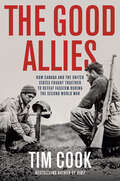
From our country's most important war historian, a gripping account of the turbulent relationship between Canada and the US during…
the Second World War. The two nations entered the war amidst rivalry and mutual suspicion, but learned to fight together before emerging triumphant and bound by an alliance that has lasted to this day.When the Second World War broke out in 1939, it set in motion a deadly struggle between the Axis powers and the Allies, but also fraught negotiations between and among the Allies. On questions of diplomacy, economic policy, industrial might, military capabilities, and even national sovereignty, thousands of lives and the fate of the free world depended on back-room deals and desperate trade-offs between soldiers, diplomats, and leaders.In North America, Canada and the US strained to forge a new military alliance to guard their coasts and fend off German U-boats and the menace of a Japanese invasion. Wartime economies were entwined to produce a staggering contribution of weapons to keep Britain and other allies in the war. The defence of North America against enemy threats was essential before the US and Canada could send armies, navies, and air forces overseas.In his trademark style, Tim Cook employs eyewitness accounts to vividly lay bare the brutality of combat and the courage of North Americans under fire. Behind the fighting fronts, the charged and often secret communications between national leaders Churchill, Roosevelt, and King reveal how their personalities shaped the outcome of history&’s most destructive war, the fate of the British Empire, and the North American alliance that lives on to this day.The Good Allies is a masterful account of how Canadians and Americans made the transition from wary rivals to steadfast allies, and how Canada thrived in the shadow of the military and global superpower. In exploring this complex and crucial dimension of the Second World War and its legacy, Cook recounts two nations&’ story of cooperation, of sacrifice, and of bleeding together to save the world from the fascist threat.