Title search results
Showing 1 - 12 of 12 items
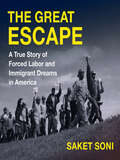
The astonishing story of immigrants lured to the United States from India and trapped in forced labor—an "eye-opening" "must-read" told…
by the visionary labor leader who engineered their escape and set them on a path to citizenship ( The New York Times Book Review ). In late 2006, Saket Soni, a 28-year-old, Indian-born community organizer received an anonymous phone call from an Indian migrant worker inside a Mississippi labor camp. He and 500 other men were living in squalor in Gulf Coast "man camps," surrounded by barbed wire, watched by armed guards, crammed into cold trailers with putrid portable toilets, forced to eat moldy bread and frozen rice. Worse, lured by the promise of good work and green cards, the men had desperately scraped together up to $20,000 each to apply for this "opportunity" to rebuild oil rigs after Hurricane Katrina, putting their families into impossible debt. During a series of clandestine meetings, Soni and the workers devise a bold plan. In The Great Escape, Soni traces the workers' extraordinary escape, their march on foot to Washington DC, and their 23-day-hunger strike to bring attention to their cause. Along the way, ICE agents try to deport the men, company officials work to discredit them, and politicians avert their eyes. But none of this shakes the workers' determination to win their dignity and keep their promises to their families. Weaving a deeply personal journey with a riveting tale of 21st-century forced labor, Soni takes us into the hidden lives of the foreign workers the US increasingly relies on for cheap skilled labor to rebuild after climate disasters. The Great Escape is the astonishing story of one of the largest human trafficking cases in modern American history—and the workers' heroic journey for justice
The instant New York Times bestseller • A New York Times Notable Book • Named a Best Book of the Year…
by The Economist • Nominated for the Financial Times and Schroders Business Book of the Year Award"Addicted to Succession? Well, here's the real thing." - The Hollywood Reporter&“Jaw-dropping . . . an epic tale of toxic wealth and greed populated by connivers and manipulators.&” —The New York Times Book Review, Editors&’ ChoiceThe shocking inside story of the struggle for power and control at Paramount Global, the multibillion-dollar entertainment empire controlled by the Redstone family, and the dysfunction, misconduct, and deceit that threatened the future of the company, from the Pulitzer Prize–winning journalists who first broke the newsIn 2016, the fate of Paramount Global&’s entertainment empire hung precariously in the balance. Its founder and head, ninety-three-year-old Sumner M. Redstone, was facing a very public lawsuit brought by a former romantic companion, Manuela Herzer, which placed Sumner&’s deteriorating health and questionable judgment under a harsh light.As an all-powerful media mogul, Sumner had been a demanding boss, and an even more demanding father. When his daughter, Shari, took control of the business, she faced the hostility of boards who for years had heard Sumner disparage her. Les Moonves, the CEO of CBS, schemed with his allies on the board to strip Shari of power. But while he publicly battled Shari, news began to leak of Moonves&’s involvement in multiple instances of sexual misconduct, and he began working behind the scenes to try to make the stories disappear.Unscripted is an explosive and unvarnished look at the usually secret inner workings of two public companies, their boards of directors, and a wealthy, dysfunctional family in the throes of seismic changes. From the Pulitzer Prize– winning journalists James B. Stewart and Rachel Abrams, Unscripted lays bare the battle for power at any price—and the carnage that ensued.
WINNER OF THE KIRKUS PRIZE FOR NONFICTIONNamed One of The New York Times’ 100 Notable Books of 2023One of Time’s…
100 Must-Read Books of 2023 | A Top Ten Book of 2023 at Chicago Public LibraryA new book by the Pulitzer Prize–winning writer about the twenty-first-century Latino experience and identity.In Our Migrant Souls, the Pulitzer Prize–winning writer Héctor Tobar delivers a definitive and personal exploration of what it means to be Latino in the United States right now.“Latino” is the most open-ended and loosely defined of the major race categories in the United States, and also one of the most rapidly growing. Composed as a direct address to the young people who identify or have been classified as “Latino,” Our Migrant Souls is the first account of the historical and social forces that define Latino identity.Taking on the impacts of colonialism, public policy, immigration, media, and pop culture, Our Migrant Souls decodes the meaning of “Latino” as a racial and ethnic identity in the modern United States, and gives voice to the anger and the hopes of young Latino people who have seen Latinidad transformed into hateful tropes and who have faced insult and division—a story as old as this country itself.Tobar translates his experience as not only a journalist and novelist but also a mentor, a leader, and an educator. He interweaves his own story, and that of his parents’ migration to the United States from Guatemala, into his account of his journey across the country to uncover something expansive, inspiring, true, and alive about the meaning of “Latino” in the twenty-first century.A new book by the Pulitzer Prize–winning writer about the twenty-first-century Latino experience and identity.In Our Migrant Souls, the Pulitzer Prize–winning writer Héctor Tobar delivers a definitive and personal exploration of what it means to be Latino in the United States right now. “Latino” is the most open-ended and loosely defined of the major race categories in the United States, and also one of the most rapidly growing. Composed as a direct address to the young people who identify or have been classified as “Latino,” Our Migrant Souls is the first account of the historical and social forces that define Latino identity.Taking on the impacts of colonialism, public policy, immigration, media, and pop culture, Our Migrant Souls decodes the meaning of “Latino” as a racial and ethnic identity in the modern United States, and gives voice to the anger and the hopes of young Latino people who have seen Latinidad transformed into hateful tropes and who have faced insult and division—a story as old as this country itself. Tobar translates his experience as not only a journalist and novelist but also a mentor, a leader, and an educator. He interweaves his own story, and that of his parents’ migration to the United States from Guatemala, into his account of his journey across the country to uncover something expansive, inspiring, true, and alive about the meaning of “Latino” in the twenty-first century.
&“An absolutely essential addition to the history of the Catholic Church, whose involvement in New World slavery sustained the Church…
and, thereby, helped to entrench enslavement in American society.&”—Annette Gordon-Reed, Pulitzer Prize–winning author of The Hemingses of Monticello and On JuneteenthIn 1838, a group of America&’s most prominent Catholic priests sold 272 enslaved people to save their largest mission project, what is now Georgetown University. In this groundbreaking account, journalist, author, and professor Rachel L. Swarns follows one family through nearly two centuries of indentured servitude and enslavement to uncover the harrowing origin story of the Catholic Church in the United States. Through the saga of the Mahoney family, Swarns illustrates how the Church relied on slave labor and slave sales to sustain its operations and to help finance its expansion. The story begins with Ann Joice, a free Black woman and the matriarch of the Mahoney family. Joice sailed to Maryland in the late 1600s as an indentured servant, but her contract was burned and her freedom stolen. Her descendants, who were enslaved by Jesuit priests, passed down the story of that broken promise for centuries. One of those descendants, Harry Mahoney, saved lives and the church&’s money in the War of 1812, but his children, including Louisa and Anna, were put up for sale in 1838. One daughter managed to escape, but the other was sold and shipped to Louisiana. Their descendants would remain apart until Rachel Swarns&’s reporting in The New York Times finally reunited them. They would go on to join other GU272 descendants who pressed Georgetown and the Catholic Church to make amends, prodding the institutions to break new ground in the movement for reparations and reconciliation in America.Swarns&’s journalism has already started a national conversation about universities with ties to slavery. The 272 tells an even bigger story, not only demonstrating how slavery fueled the growth of the American Catholic Church but also shinning a light on the enslaved people whose forced labor helped to build the largest religious denomination in the nation.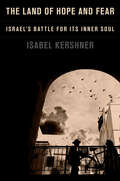
A rich, wide-ranging portrait of the divisions among Israelis today, at a critical juncture in their country&’s history, by a…
veteran New York Times correspondent who has spent decades working in Israel&“A wondrous tale told through the agonizing and uplifting stories of Israel&’s many tribes — Jewish and Arab, religious and secular, new immigrants and veterans, soldiers and settlers.&”—Martin Indyk, author of Master of the Game, and former U.S. ambassador to IsraelDespite Israel's determined staying power in a hostile environment, its military might, and the innovation it fosters in businesses globally, the country is more divided than ever. The old guard—socialist secular elites and idealists—are a dying breed, and the state&’s democratic foundations are being challenged. A dynamic and exuberant country of nine million, Israel is now largely comprised of native-born Hebrew speakers, and yet any permanent sense of security and normalcy is elusive.In The Land of Hope and Fear, we meet Israelis: Jews and Arabs, religious and secular, Eastern and Western, liberals and zealots—plagued by perennial conflict and existential threats, citizens who remain deeply polarized politically, socially, and ideologically, even as they undergo generational change and redefine what it is to be an Israeli. Who are these people and to what do they aspire?In moving narratives and with on-the-ground reporting, Isabel Kershner reveals the core of what holds Israel together and the forces that threaten its future through the lens of real people: a son of Zionist pioneers, cynical about what is to come and his people&’s status in it; a woman in her nineties whose life in a kibbutz has disintegrated; a brilliant poet caught up in the political maelstrom; an Arab gallery owner archiving a lost Palestinian landscape; and a descendant of the Russian aliyah; representing millions of culturally and religiously different Jews, laying bare the question Who is an Israeli? The Land of Hope and Fear decodes Israel today at its seventy-fifth anniversary, examining the ways in which the country has both exceeded and failed the ideals and expectations of its founders.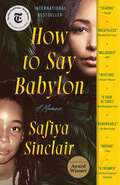
National Book Critics Circle Award Winner A New York Times Notable Book A Read with Jenna Today Show Book Club…
Pick! A Best Book of 2023 by the New York Times, Time, The Washington Post, Vulture, Shelf Awareness, Goodreads, Esquire, The Atlantic, NPR, and Barack Obama With echoes of Educated and Born a Crime, How to Say Babylon is the stunning story of the author&’s struggle to break free of her rigid Rastafarian upbringing, ruled by her father&’s strict patriarchal views and repressive control of her childhood, to find her own voice as a woman and poet.Throughout her childhood, Safiya Sinclair&’s father, a volatile reggae musician and militant adherent to a strict sect of Rastafari, became obsessed with her purity, in particular, with the threat of what Rastas call Babylon, the immoral and corrupting influences of the Western world outside their home. He worried that womanhood would make Safiya and her sisters morally weak and impure, and believed a woman&’s highest virtue was her obedience. In an effort to keep Babylon outside the gate, he forbade almost everything. In place of pants, the women in her family were made to wear long skirts and dresses to cover their arms and legs, head wraps to cover their hair, no make-up, no jewelry, no opinions, no friends. Safiya&’s mother, while loyal to her father, nonetheless gave Safiya and her siblings the gift of books, including poetry, to which Safiya latched on for dear life. And as Safiya watched her mother struggle voicelessly for years under housework and the rigidity of her father&’s beliefs, she increasingly used her education as a sharp tool with which to find her voice and break free. Inevitably, with her rebellion comes clashes with her father, whose rage and paranoia explodes in increasing violence. As Safiya&’s voice grows, lyrically and poetically, a collision course is set between them. How to Say Babylon is Sinclair&’s reckoning with the culture that initially nourished but ultimately sought to silence her; it is her reckoning with patriarchy and tradition, and the legacy of colonialism in Jamaica. Rich in lyricism and language only a poet could evoke, How to Say Babylon is both a universal story of a woman finding her own power and a unique glimpse into a rarefied world we may know how to name, Rastafari, but one we know little about.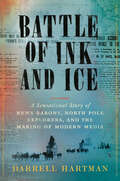
"Absolutely gripping… a perfectly splendid read—I highly, highly recommend it&” -- Douglas Preston, author of the #1 New York Times…
bestseller The Lost City of the Monkey GodA sixty-year saga of frostbite and fake news that follows the no-holds-barred battle between two legendary explorers to reach the North Pole, and the newspapers which stopped at nothing to get–and sell–the story.In the fall of 1909, a pair of bitter contests captured the world&’s attention. The American explorers Robert Peary and Frederick Cook both claimed to have discovered the North Pole, sparking a vicious feud that was unprecedented in international scientific and geographic circles. At the same time, the rivalry between two powerful New York City newspapers—the storied Herald and the ascendant Times—fanned the flames of the so-called polar controversy, as each paper financially and reputationally committed itself to an opposing explorer and fought desperately to defend him.The Herald was owned and edited by James Gordon Bennett, Jr., an eccentric playboy whose nose for news was matched only by his appetite for debauchery and champagne. The Times was published by Adolph Ochs, son of Jewish immigrants, who&’d improbably rescued the paper from extinction and turned it into an emerging powerhouse. The battle between Cook and Peary would have enormous consequences for both newspapers, and help to determine the future of corporate media. BATTLE OF INK AND ICE presents a frank portrayal of Arctic explorers, brave men who both inspired and deceived the public. It also sketches a vivid portrait of the newspapers that funded, promoted, narrated, and often distorted their exploits. It recounts a sixty-year saga of frostbite and fake news, one that culminates with an unjustly overlooked chapter in the origin story of the modern New York Times.By turns tragic and absurd, BATTLE OF INK AND ICE brims with contemporary relevance, touching as it does on themes of class, celebrity, the ever-quickening news cycle, and the benefits and pitfalls of an increasingly interconnected world. Above all, perhaps, its cast of characters testifies—colorfully and compellingly—to the ongoing role of personality and publicity in American cultural life as the Gilded Age gave way to the twentieth century—the American century.
One of The Millions&’ &“Most Anticipated Books of 2023One of The New York Times&’ &“19 Works of Nonfiction to Read…
This Spring&”A dazzlingly inventive, deeply moving, intellectually bracing exploration of pain and beauty, private memory and public monument, art and complexity in contemporary Black life.&“I wanted to write about silences and terror and acts that hover over generations, over centuries. I began by writing about my mother and grandmother.&” —from &“Note 18&” in Ordinary NotesA singular achievement, Ordinary Notes explores with immense care profound questions about loss, and the shapes of Black life that emerge in the wake. In a series of 248 brief and urgent notes that gather meaning as we read them, Christina Sharpe skillfully weaves artifacts from the past—public ones alongside others that are poignantly personal—with present-day realities and possible futures, intricately constructing an immersive portrait of everyday Black existence. Through the striking images and words in these pages, themes and tones echo: sometimes about life, art, language, beauty, memory; sometimes about history, photography, and literature—but always attending, with exquisite care, to the ordinary-extraordinary dimensions of Black life. At the heart of Ordinary Notes is the indelible presence of the author&’s mother, Ida Wright Sharpe. &“I learned to see in my mother&’s house,&” writes Sharpe. &“I learned how not to see in my mother&’s house . . . My mother gifted me a love of beauty, a love of words.&” Using these and other gifts and ways of seeing, Sharpe steadily summons a chorus of voices and experiences to become present on the page. She articulates and follows an aesthetic of "beauty as a method,&” collects entries from a community of thinkers towards a &“Dictionary of Untranslatable Blackness,&” and rigorously examines sites of memory and memorial. And in the process, she forges a new literary form, as multivalent as the ways of Black being it traces.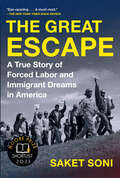
A New York Times Notable Book of 2023 Shortlisted for the 2023 Moore Prize The astonishing story of immigrants lured to the…
United States from India and trapped in forced labor—an "eye-opening" "must-read" told by the visionary labor leader who engineered their escape and set them on a path to citizenship (The New York Times Book Review). In late 2006, Saket Soni, a twenty-eight-year-old Indian-born community organizer, received an anonymous phone call from an Indian migrant worker in Mississippi. He was one of five hundred men trapped in squalid Gulf Coast &“man camps,&” surrounded by barbed wire, watched by guards, crammed into cold trailers with putrid toilets, forced to eat moldy bread and frozen rice. Recruiters had promised them good jobs and green cards. The men had scraped up $20,000 each for this &“opportunity&” to rebuild hurricane-wrecked oil rigs, leaving their families in impossible debt. During a series of clandestine meetings, Soni and the workers devised a bold plan. In The Great Escape, Soni traces the workers&’ extraordinary escape, their march on foot to Washington, DC, and their twenty-three-day hunger strike to bring attention to their cause. Along the way, ICE agents try to deport the men, company officials work to discredit them, and politicians avert their eyes. But none of this shakes the workers&’ determination to win their dignity and keep their promises to their families. Weaving a deeply personal journey with a riveting tale of twenty-first-century forced labor, Soni takes us into the lives of the immigrant workers the United States increasingly relies on to rebuild after climate disasters. The Great Escape is the gripping story of one of the largest human trafficking cases in modern American history—and the workers&’ heroic journey for justice.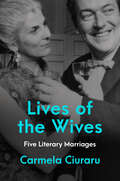
"The five marriages that Carmela Ciuraru explores in Lives of the Wives provide such delightfully gossipy pleasure that we have to remind…
ourselves that these were real people whose often stormy relationships must surely have been less fun to experience than they are for us to read about."—Francine Prose, author of The VixenA witty, provocative look inside the tumultuous marriages of five writers, illuminating the creative process as well as the role of money, power, and fame in these complex and fascinating relationships."With an ego the size of a small nation, the literary lion is powerful on the page, but a helpless kitten in daily life—dependent on his wife to fold an umbrella, answer the phone, or lick a stamp."The history of wives is largely one of silence, resilience, and forbearance. Toss in celebrity, male privilege, ruthless ambition, narcissism, misogyny, infidelity, alcoholism, and a mood disorder or two, and it's easy to understand why the marriages of so many famous writers have been stormy, short-lived, and mutually destructive. "It's been my experience," as the critic and novelist Elizabeth Hardwick once wrote, "that nobody holds a man's brutality to his wife against him." Literary wives are a unique breed, requiring a particular kind of fortitude.Author Carmela Ciuraru shares the stories of five literary marriages, exposing the misery behind closed doors. The legendary British theatre critic Kenneth Tynan encouraged his American wife, Elaine Dundy, to write, then watched in a jealous rage as she became a bestselling author and critical success. In the early years of their marriage, Roald Dahl enjoyed basking in the glow of his glamorous movie star wife, Patricia Neal, until he detested her for being the breadwinner, and being more famous than he was. Elizabeth Jane Howard had to divorce Kingsley Amis to escape his suffocating needs and devote herself to her own writing. ("I really couldn't write very much when I was married to him," she once recalled, "because I had a very large household to keep up and Kingsley wasn't one to boil an egg, if you know what I mean.") Surprisingly, the most traditional partnership in Lives of the Wives is a lesbian couple, Una Troubridge and Radclyffe Hall, both of whom were socially and politically conservative and unapologetic snobs.As this erudite and entertaining work shows, each marriage is a unique story, filled with struggles and triumphs and the negotiation of power. The Italian novelists Elsa Morante and Alberto Moravia were never sexually compatible, and it was Morante who often behaved abusively toward her cool, detached husband, even as he unwaveringly admired his wife's talents and championed her work. Theirs was an unhappy union, yet it fueled them creatively and enabled both to become two of Italy's most important postwar writers.These are stories of vulnerability, loneliness, infidelity, envy, sorrow, abandonment, heartbreak, and forgiveness. Above all, Lives of the Wives honors the women who have played the role of muses, agents, editors, proofreaders, housekeepers, gatekeepers, amaneunses, confidantes, and cheerleaders to literary trailblazers throughout history. In revisiting the lives of famous writers, it is time in our #MeToo era to highlight the achievements of their wives—and the price these women paid for recognition and freedom. Lives of the Wives is an insightful, humorous, and poignant exploration of the intersection of life and art and creativity and love.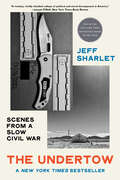
An Instant New York Times Bestseller. A National Book Critics Circle Finalist for Nonfiction One of the New York Times…
100 Notable Books of 2023 One of The New Republic's Best Books of 2023 “A riveting, vividly detailed collage of political and moral derangement in America.” —Joseph O’Neill, New York Times Book Review One of America’s finest reporters and essayists explores the powerful currents beneath the roiled waters of a nation coming apart. An unmatched guide to the religious dimensions of American politics, Jeff Sharlet journeys into corners of our national psyche where others fear to tread. The Undertow is both inquiry and meditation, an attempt to understand how, over the last decade, reaction has morphed into delusion, social division into distrust, distrust into paranoia, and hatred into fantasies—sometimes realities—of violence. Across the country, men “of God” glorify materialism, a gluttony of the soul, while citing Scripture and preparing for civil war—a firestorm they long for as an absolution and exaltation. Lies, greed, and glorification of war boom through microphones at hipster megachurches that once upon a time might have preached peace and understanding. Political rallies are as aflame with need and giddy expectation as religious revivals. At a conference for incels, lonely single men come together to rage against women. On the Far Right, everything is heightened—love into adulation, fear into vengeance, anger into white-hot rage. Here, in the undertow, our forty-fifth president, a vessel of conspiratorial fears and fantasies, continues to rise to sainthood, and the insurrectionist Ashli Babbitt, killed on January 6 at the Capitol, is beatified as a martyr of white womanhood. Framing this dangerous vision, Sharlet remembers and celebrates the courage of those who sing a different song of community, and of an America long dreamt of and yet to be fully born, dedicated to justice and freedom for all. Exploring a geography of grief and uncertainty in the midst of plague and rising fascism, The Undertow is a necessary reckoning with our precarious present that brings to light a decade of American failures as well as a vision for American possibility.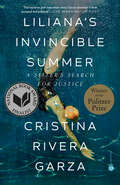
PULITZER PRIZE WINNER • NATIONAL BOOK AWARD FINALIST • A NEW YORK TIMES NOTABLE BOOK • &“A searing account of grief…
and the quest to bring her sister&’s murderer to justice years after the fact&” (The Boston Globe), from &“one of Mexico&’s greatest living writers&” (Jonathan Lethem). &“Part memoir, part true-crime story, Garza&’s chronicle is both personal and political.&”—The Washington PostA BEST BOOK OF THE YEAR: The New York Times Book Review, NPR, The Washington Post, Time, Chicago Public Library, She Reads, Electric LitOctober 18, 2019. Cristina Rivera Garza travels from her home in Texas to Mexico City, in search of an old, unresolved criminal file. &“My name is Cristina Rivera Garza,&” she writes in her request to the attorney general, &“and I am writing to you as a relative of Liliana Rivera Garza, who was murdered on July 16, 1990.&” It&’s been twenty-nine years. Twenty-nine years, three months, and two days since Liliana was murdered by an abusive ex-boyfriend. Inspired by feminist movements across the world and enraged by the global epidemic of femicide and intimate partner violence, Cristina embarks on a path toward justice. Liliana&’s Invincible Summer is the account—and the outcome—of that quest .In luminous, poetic prose, Rivera Garza tells a singular yet universally resonant story: Liliana is a spirited, wondrously hopeful young woman who tried to survive in a world of increasingly normalized gendered violence. Rivera Garza traces her sister&’s history, depicting everything from Liliana&’s early romance with a handsome but possessive and short-tempered man to that exhilarating final summer of 1990 when she loved, thought, and traveled more widely and freely than she ever had before.Using her skills as an acclaimed scholar, novelist, and poet, Rivera Garza collected and curated evidence—handwritten letters, police reports, school notebooks, interviews with Liliana&’s loved ones—to document her sister&’s life. Through this remarkable and genre-defying memoir, she confronts the trauma of losing her sister and examines how this tragedy continues to shape who she is—and what she fights for—today.