Title search results
Showing 1 - 3 of 3 items
DAISY audio (Direct to player), DAISY audio (Zip)
History, Fine arts biography, Arts and entertainment
Human-narrated audio
Longlisted for the National Book Award The never-before-told story of an obscure little street at the lower tip of Manhattan…
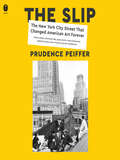
and the remarkable artists who got their start there. For just over a decade, from 1956 to 1967, a collection of dilapidated former sail-making warehouses clustered at the lower tip of Manhattan became the quiet epicenter of the art world. Coenties Slip, a dead-end street near the water, was home to a circle of wildly talented and varied artists that included Robert Indiana, Ellsworth Kelly, Agnes Martin, James Rosenquist, Delphine Seyrig, Lenore Tawney, and Jack Youngerman. As friends and inspirations to one another, they created a unique community for unbridled creative expression and experimentation, and the works they made at the Slip would go on to change the course of American art. Now, for the first time, Prudence Peiffer pays homage to these artists and the unsung impact their work had on the direction of late twentieth-century art and film. This remarkable biography, as transformative as the artists it illuminates, questions the very concept of a "group" or "movement," as it spotlights the Slip's eclectic mix of gender and sexual orientation, abstraction and Pop, experimental film, painting, and sculpture, assemblage and textile works. Brought together not by the tenets of composition or technique, nor by philosophy or politics, the artists cultivated a scene at the Slip defined by a singular spirit of community and place. They drew lasting inspiration from one another, but perhaps even more from where they called home, and the need to preserve the solitude its geography fostered. Despite Coenties Slip's obscurity, the entire history of Manhattan was inscribed into its cobblestones—one of the first streets and central markets of the new colony, built by enslaved people, with revolutionary meetings at the tavern just down Pearl Street; named by Herman Melville in Moby Dick and site of the boom and bust of the city's maritime industry; and, in the artists's own time, a development battleground for Jane Jacobs and Robert Moses. The Slip's history is entwined with that of the artists and their art—eclectic and varied work that was made from the wreckage of the city's many former lives. An ambitious and singular account of a time, a place, and a group of extraordinary people, The Slip investigates the importance of community, and makes an argument for how we are shaped by it, and how it in turns shapes our work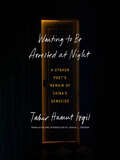
DAISY audio (Direct to player), DAISY audio (Zip)
Journals and memoirs, Literature biography, Canadian non-fiction, Asian history
Human-narrated audio
A poet's account of one of the world's most urgent humanitarian crises, and a harrowing tale of a family's escape…
from genocide One by one, Tahir Hamut Izgil's friends disappeared. The Chinese government's brutal persecution of the Uyghur people had continued for years, but in 2017 it assumed a terrifying new scale. The Uyghurs, a predominantly Muslim minority group in western China, were experiencing an echo of the worst horrors of the twentieth century, amplified by China's establishment of an all-seeing high-tech surveillance state. Over a million people have vanished into China’s internment camps for Muslim minorities. Tahir, a prominent poet and intellectual, had been no stranger to persecution. After he attempted to travel abroad in 1996, police tortured him until he confessed to fabricated charges and sent him to a re-education through labor camp. But even having endured three years in the camp, he could never have predicted the Chinese government’s radical solution to the Uyghur question two decades later. Was the first sign when Tahir was interrogated for hours after a phone call with a fellow poet in the Netherlands? Or when his old friend was sentenced to life in prison simply for calling for Uyghurs' legal rights to be enforced? Perhaps it was when the police seized Uyghurs’ radios and installed jamming equipment to cut them off from the outside world. Once Tahir noticed that the park near his home was nearly empty because so many neighbors had been arrested, he knew the police would be coming for him any day. One night, after Tahir’s daughters were asleep, he placed by his door a sturdy pair of shoes, a sweater, and a coat so that he could stay warm if the police came for him in the middle of the night. It was clear to Tahir and his wife that fleeing the country was the family's only hope. Waiting to Be Arrested at Night is the story of the political, social, and cultural destruction of Tahir Hamut Izgil's homeland. Among leading Uyghur intellectuals and writers, he is the only one known to have escaped China since the mass internments began. His book is a call for the world to awaken to the unfolding catastrophe, and a tribute to his friends and fellow Uyghurs whose voices have been silenced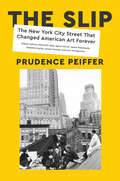
Braille (Contracted), Electronic braille (Contracted), DAISY Audio (Direct to Player), DAISY Audio (Zip), DAISY text (Direct to player), DAISY text (Zip), Word (Zip), ePub (Zip)
Arts and entertainment, Fine arts biography
Synthetic audio, Automated braille
Longlisted for the National Book Award · Shortlisted for the Apollo Book of the Year Award · A New York…
Times Notable Book of the YearThe never-before-told story of an obscure little street at the lower tip of Manhattan and the remarkable artists who got their start there. For just over a decade, from 1956 to 1967, a collection of dilapidated former sail-making warehouses clustered at the lower tip of Manhattan became the quiet epicenter of the art world. Coenties Slip, a dead-end street near the water, was home to a circle of wildly talented and varied artists that included Robert Indiana, Ellsworth Kelly, Agnes Martin, James Rosenquist, Delphine Seyrig, Lenore Tawney, and Jack Youngerman. As friends and inspirations to one another, they created a unique community for unbridled creative expression and experimentation, and the works they made at the Slip would go on to change the course of American art.Now, for the first time, Prudence Peiffer pays homage to these artists and the unsung impact their work had on the direction of late twentieth-century art and film. This remarkable biography, as transformative as the artists it illuminates, questions the very concept of a “group” or “movement,” as it spotlights the Slip’s eclectic mix of gender and sexual orientation, abstraction and Pop, experimental film, painting, and sculpture, assemblage and textile works. Brought together not by the tenets of composition or technique, nor by philosophy or politics, the artists cultivated a scene at the Slip defined by a singular spirit of community and place. They drew lasting inspiration from one another, but perhaps even more from where they called home, and the need to preserve the solitude its geography fostered. Despite Coenties Slip’s obscurity, the entire history of Manhattan was inscribed into its cobblestones—one of the first streets and central markets of the new colony, built by enslaved people, with revolutionary meetings at the tavern just down Pearl Street; named by Herman Melville in Moby Dick and site of the boom and bust of the city’s maritime industry; and, in the artists’s own time, a development battleground for Jane Jacobs and Robert Moses. The Slip’s history is entwined with that of the artists and their art—eclectic and varied work that was made from the wreckage of the city’s many former lives.An ambitious and singular account of a time, a place, and a group of extraordinary people, The Slip investigates the importance of community, and makes an argument for how we are shaped by it, and how it in turns shapes our work.