Title search results
Showing 1 - 3 of 3 items
Braille (Contracted), Electronic braille (Contracted), DAISY Audio (Direct to Player), DAISY Audio (Zip), DAISY text (Direct to player), DAISY text (Zip), Word (Zip), ePub (Zip)
Arts and entertainment, European history, Music
Synthetic audio, Automated braille
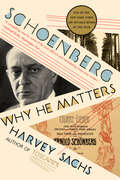
An astonishingly lyrical biography that rescues Schoenberg from notoriety, restoring him to his rightful place in the pantheon of twentieth-century…
composers. In his time, the Austrian American composer Arnold Schoenberg (1874–1951) was an international icon. His twelve-tone system was considered the future of music itself. Today, however, leading orchestras rarely play his works, and his name is met with apathy, if not antipathy. With this interpretative account, the acclaimed biographer of Toscanini finally restores Schoenberg to his rightful place in the canon, revealing him as one of the twentieth century’s most influential composers and teachers. Sachs shows how Schoenberg, a thorny character who composed thorny works, raged against the “Procrustean bed” of tradition. Defying his critics—among them the Nazis, who described his music as “degenerate”—he constantly battled the anti-Semitism that eventually precipitated his flight from Europe to Los Angeles. Yet Schoenberg, synthesizing Wagnerian excess with Brahmsian restraint, created a shock wave that never quite subsided, and, as Sachs powerfully argues, his compositions must be confronted by anyone interested in the past, present, or future of Western music.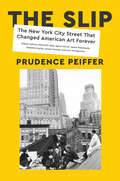
Braille (Contracted), Electronic braille (Contracted), DAISY Audio (Direct to Player), DAISY Audio (Zip), DAISY text (Direct to player), DAISY text (Zip), Word (Zip), ePub (Zip)
Arts and entertainment, Fine arts biography
Synthetic audio, Automated braille
Longlisted for the National Book Award · Shortlisted for the Apollo Book of the Year Award · A New York…
Times Notable Book of the YearThe never-before-told story of an obscure little street at the lower tip of Manhattan and the remarkable artists who got their start there. For just over a decade, from 1956 to 1967, a collection of dilapidated former sail-making warehouses clustered at the lower tip of Manhattan became the quiet epicenter of the art world. Coenties Slip, a dead-end street near the water, was home to a circle of wildly talented and varied artists that included Robert Indiana, Ellsworth Kelly, Agnes Martin, James Rosenquist, Delphine Seyrig, Lenore Tawney, and Jack Youngerman. As friends and inspirations to one another, they created a unique community for unbridled creative expression and experimentation, and the works they made at the Slip would go on to change the course of American art.Now, for the first time, Prudence Peiffer pays homage to these artists and the unsung impact their work had on the direction of late twentieth-century art and film. This remarkable biography, as transformative as the artists it illuminates, questions the very concept of a “group” or “movement,” as it spotlights the Slip’s eclectic mix of gender and sexual orientation, abstraction and Pop, experimental film, painting, and sculpture, assemblage and textile works. Brought together not by the tenets of composition or technique, nor by philosophy or politics, the artists cultivated a scene at the Slip defined by a singular spirit of community and place. They drew lasting inspiration from one another, but perhaps even more from where they called home, and the need to preserve the solitude its geography fostered. Despite Coenties Slip’s obscurity, the entire history of Manhattan was inscribed into its cobblestones—one of the first streets and central markets of the new colony, built by enslaved people, with revolutionary meetings at the tavern just down Pearl Street; named by Herman Melville in Moby Dick and site of the boom and bust of the city’s maritime industry; and, in the artists’s own time, a development battleground for Jane Jacobs and Robert Moses. The Slip’s history is entwined with that of the artists and their art—eclectic and varied work that was made from the wreckage of the city’s many former lives.An ambitious and singular account of a time, a place, and a group of extraordinary people, The Slip investigates the importance of community, and makes an argument for how we are shaped by it, and how it in turns shapes our work.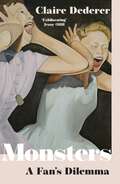
Braille (Contracted), Electronic braille (Contracted), DAISY Audio (Direct to Player), DAISY Audio (Zip), DAISY text (Direct to player), DAISY text (Zip), Word (Zip), ePub (Zip)
Arts and entertainment, Criticism, Philosophy
Synthetic audio, Automated braille
'An exhilarating, shape-shifting exploration of the perilous boundaries between art and life' JENNY OFFILL'An incredible book, the best work of…
criticism I have read in a very long time' NICK HORNBY'Wise and bold and full of the kind of gravitas that might even rub off' LISA TADDEOA passionate, provocative and blisteringly smart interrogation of how we experience art in the age of #MeToo, and whether we can separate an artist's work from their biography.What do we do with the art of monstrous men? Can we love the work of Roman Polanski and Michael Jackson, Hemingway and Picasso? Should we love it? Does genius deserve special dispensation? What makes women artists monstrous? And what should we do with beauty, and with our unruly feelings about it?Claire Dederer explores these questions and our relationships with the artists whose behaviour disrupts our ability to understand the work on its own terms. She interrogates her own responses and behaviour, and she pushes the fan, and the reader, to do the same. Morally wise, deeply considered and sharply written, Monsters gets to the heart of one of our most pressing conversations.'A blisteringly erudite and entertaining read . . . It's a book that deserves to be widely read and will provoke many conversations' NATHAN FILER'Fascinating . . . Dederer poses so many topical questions, plays with so many pertinent ideas, that I'm still thinking about this book long after I finished it' CLAIRE FULLER