Title search results
Showing 1 - 2 of 2 items
Braille (Contracted), Electronic braille (Contracted), DAISY Audio (Direct to Player), DAISY Audio (Zip), DAISY text (Direct to player), DAISY text (Zip), Word (Zip), ePub (Zip)
History, Politics and government, Social issues
Synthetic audio, Automated braille
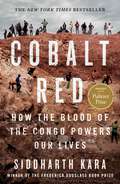
The revelatory Pulitzer Prize finalist for General Nonfiction, New York Times and Publishers Weekly bestseller, shortlisted for the Financial Times…
Best Business Book of the Year Award.An unflinching investigation reveals the human rights abuses behind the Congo’s cobalt mining operation—and the moral implications that affect us all.Cobalt Red is the searing, first-ever exposé of the immense toll taken on the people and environment of the Democratic Republic of the Congo by cobalt mining, as told through the testimonies of the Congolese people themselves. Activist and researcher Siddharth Kara has traveled deep into cobalt territory to document the testimonies of the people living, working, and dying for cobalt. To uncover the truth about brutal mining practices, Kara investigated militia-controlled mining areas, traced the supply chain of child-mined cobalt from toxic pit to consumer-facing tech giants, and gathered shocking testimonies of people who endure immense suffering and even die mining cobalt.Cobalt is an essential component to every lithium-ion rechargeable battery made today, the batteries that power our smartphones, tablets, laptops, and electric vehicles. Roughly 75 percent of the world’s supply of cobalt is mined in the Congo, often by peasants and children in sub-human conditions. Billions of people in the world cannot conduct their daily lives without participating in a human rights and environmental catastrophe in the Congo. In this stark and crucial book, Kara argues that we must all care about what is happening in the Congo—because we are all implicated.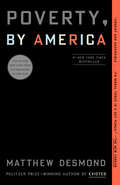
Braille (Contracted), Electronic braille (Contracted), DAISY Audio (Direct to Player), DAISY Audio (Zip), DAISY text (Direct to player), DAISY text (Zip), Word (Zip), ePub (Zip)
Politics and government, Social issues
Synthetic audio, Automated braille
#1 NEW YORK TIMES BESTSELLER • The Pulitzer Prize–winning author of Evicted reimagines the debate on poverty, making a &“provocative and…
compelling&” (NPR) argument about why it persists in America: because the rest of us benefit from it.A BEST BOOK OF THE YEAR: The New Yorker, The New York Times Book Review, NPR, Oprah Daily, Time, The Star Tribune, Vulture, The Christian Science Monitor, Chicago Public Library, Esquire, California Review of Books, She Reads, Library Journal&“Urgent and accessible . . . Its moral force is a gut punch.&”—The New YorkerLonglisted for the Inc. Non-Obvious Book Award • Longlisted for the Andrew Carnegie Medal The United States, the richest country on earth, has more poverty than any other advanced democracy. Why? Why does this land of plenty allow one in every eight of its children to go without basic necessities, permit scores of its citizens to live and die on the streets, and authorize its corporations to pay poverty wages? In this landmark book, acclaimed sociologist Matthew Desmond draws on history, research, and original reporting to show how affluent Americans knowingly and unknowingly keep poor people poor. Those of us who are financially secure exploit the poor, driving down their wages while forcing them to overpay for housing and access to cash and credit. We prioritize the subsidization of our wealth over the alleviation of poverty, designing a welfare state that gives the most to those who need the least. And we stockpile opportunity in exclusive communities, creating zones of concentrated riches alongside those of concentrated despair. Some lives are made small so that others may grow. Elegantly written and fiercely argued, this compassionate book gives us new ways of thinking about a morally urgent problem. It also helps us imagine solutions. Desmond builds a startlingly original and ambitious case for ending poverty. He calls on us all to become poverty abolitionists, engaged in a politics of collective belonging to usher in a new age of shared prosperity and, at last, true freedom.